NASA Solar Storm Warning July 2026: X-Class Flare Global Impact
Join Our WhatsApp Channel for Latest UpdatesThe July 2026 Solar Storm: NASA Issues Warning for Massive X-Class Flare Approaching Earth
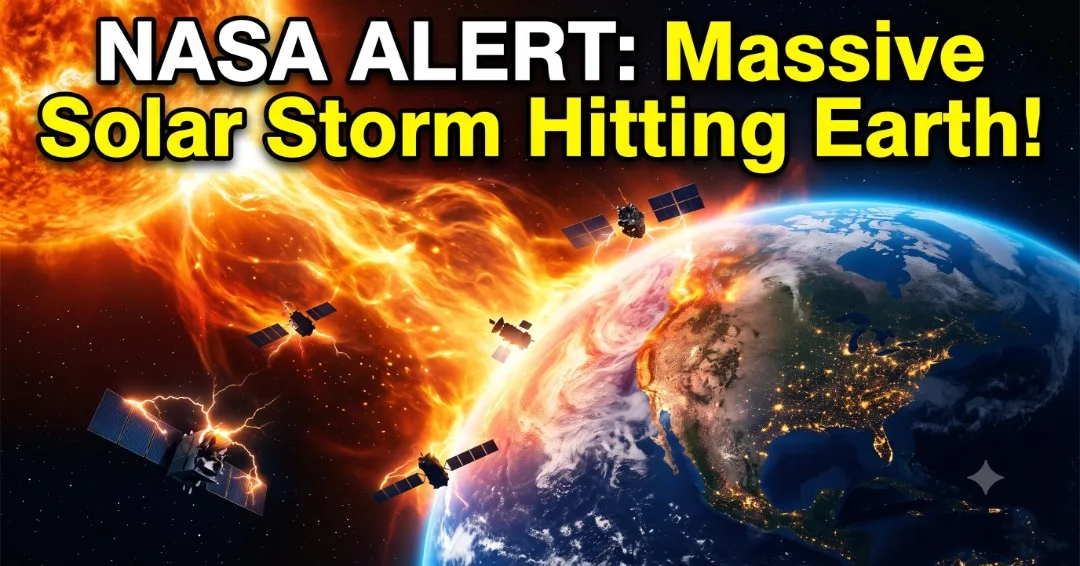
Space weather has suddenly become the most critical news on the planet. As the sun reaches the absolute peak of its 11-year solar cycle in July 2026, space agencies around the world, led by NASA and the NOAA Space Weather Prediction Center, have issued urgent advisories. A massive, complex sunspot cluster has unleashed an X-Class solar flare, accompanied by a fast-moving Coronal Mass Ejection (CME) that is currently hurtling directly toward Earth.
While this will trigger some of the most spectacular auroras seen in centuries, the technological implications are severe. CareerFlora breaks down the science behind this historic solar storm, the timeline of impact, and what it truly means for our global internet, GPS grids, and daily connectivity.
Latest Verified Information: The X-Class Threat
Solar flares are classified by their strength, with 'X-class' denoting the most intense, massive explosions in the solar system. The flare detected this week is one of the strongest recorded in the current Solar Cycle 25.
The immediate flash of electromagnetic radiation has already caused minor high-frequency radio blackouts over the sunlit side of the Earth. However, the real concern is the trailing Coronal Mass Ejection (CME)—a massive cloud of magnetized plasma. When this plasma cloud collides with Earth's magnetic field, it causes a severe geomagnetic storm. NOAA has upgraded the upcoming storm watch to a G4 (Severe) and potentially G5 (Extreme) level.
Detailed Explanation: Will the Internet Break?
The phrase "internet blackout" often circulates during these events, but the reality requires nuanced understanding.
- Submarine Cables: The backbone of the global internet relies on massive undersea fiber-optic cables. While the optical fibers themselves are immune to magnetic disruption, the electronic "repeaters" spaced along the cables (which boost the signal) are highly vulnerable to geomagnetically induced currents (GICs). A severe G5 storm could short out these repeaters, leading to massive international connectivity drops.
- Satellites and GPS: Satellites in Low Earth Orbit (LEO) will face increased atmospheric drag as the solar energy heats and expands the Earth's upper atmosphere. This can degrade GPS accuracy globally—impacting aviation, maritime navigation, and even basic smartphone maps.
Power Grids: The most direct threat to civilians is electrical grid fluctuation. Power companies have been alerted to reroute loads and protect transformers from power surges caused by the magnetic storm.
Important Facts & What You Should Do
- Safety: Solar storms pose absolutely zero direct physical threat to human health on the ground. Earth's atmosphere and magnetic field completely protect our bodies.
- Preparation: It is advisable to have a physical backup of critical digital documents and a small supply of cash, in case localized point-of-sale (card machine) systems experience temporary outages due to internet disruptions.
Auroras: On a positive note, the Northern and Southern Lights will be supercharged. Auroras may be visible much closer to the equator than usual, potentially reaching parts of southern Europe and the mid-western United States.
Timeline of the July 2026 Solar Event
- T-Minus 72 Hours: NASA's Solar Dynamics Observatory detects the massive X-Class flare eruption.
- T-Minus 48 Hours: Initial radio blackouts reported; CME trajectory confirmed to be Earth-directed.
Impact Window (Expected this weekend): The CME plasma cloud strikes Earth's magnetosphere. Peak geomagnetic storming begins, lasting for 12 to 24 hours.
Expert Analysis: A Vulnerable Digital Age
Astrophysicists emphasize that while solar storms are natural, regular occurrences, humanity's vulnerability to them has never been higher. Unlike the historic Carrington Event of 1859 (which only fried telegraph wires), a storm of that magnitude today would hit a society entirely dependent on digital infrastructure. The July 2026 event serves as a massive stress test for our modern satellite networks and power grids, pushing governments to invest heavily in space weather forecasting and grid-hardening technologies.
FAQs
Q: Can a solar storm harm me physically? A: No. Unless you are an astronaut currently outside a shielded spacecraft, the Earth's atmosphere protects all biological life from solar radiation.
Q: How long will the potential internet disruptions last? A: If a localized disruption occurs due to a blown transformer or satellite drag, repairs could take anywhere from a few hours to a few days. A total, permanent global blackout is highly unlikely.
Q: Where can I see the auroras? A: During a G4 or G5 storm, auroras move far away from the poles. Check local dark-sky maps, but they could be visible in areas normally entirely devoid of Northern Lights.
Conclusion
The July 2026 solar storm is a humbling reminder that our highly advanced digital civilization operates at the mercy of our local star. While panic is unnecessary, awareness is crucial. Power grid operators and satellite technicians are currently working overtime to shield our infrastructure. Keep your eyes on the skies for historic auroras, and stay connected with CareerFlora for live space weather updates and technological impact reports.