
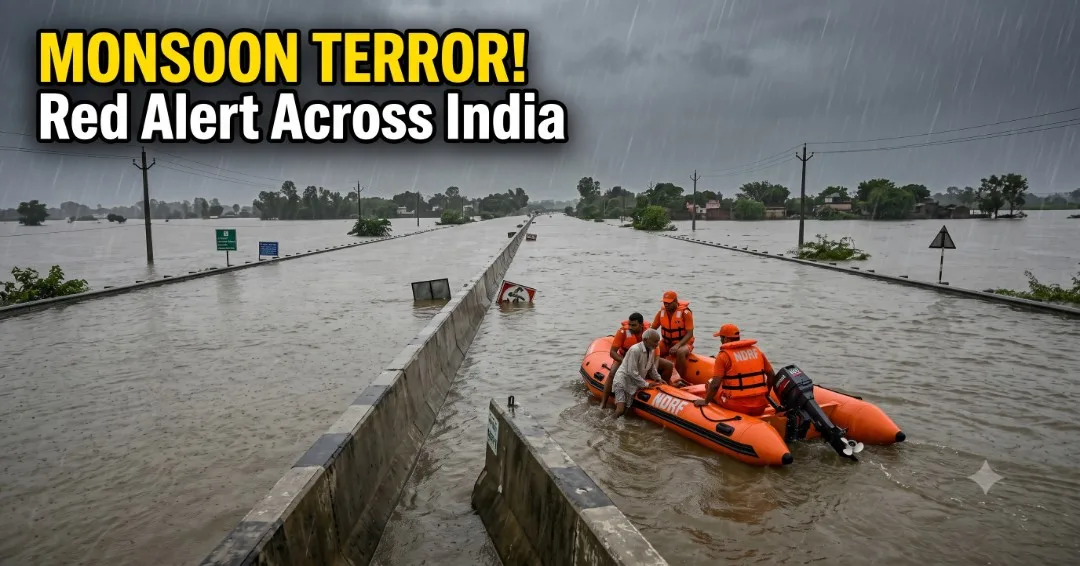
INDIA UNDER WATER! 2026 Monsoon Unleashes Hell: Flash Floods, Landslides & Red Alerts!
Join Our WhatsApp Channel for Latest UpdatesThe 2026 Indian Monsoon Crisis: Flash Floods, Landslides, and a Nation on High Alert
The July 2026 monsoon has unleashed unprecedented fury across the Indian subcontinent, transforming essential rainfall into a widespread natural disaster. From the fragile ecological zones of the Himalayas down to the southern coastal belts, torrential downpours have disrupted daily life, caused severe infrastructure damage, and tragically claimed multiple lives.
As rivers breach their banks and the India Meteorological Department (IMD) issues string after string of red alerts, state governments are scrambling to deploy disaster response teams. In this detailed report by CareerFlora, we break down the latest verified data on the monsoon's impact, the worst-hit regions, and what experts say about the changing climate patterns driving this extreme weather.
Latest Verified Information (As of July 10, 2026)
Over the past 72 hours, the monsoon has rapidly intensified. According to the latest IMD bulletins and ground reports, more than 10 people have tragically lost their lives in rain-related incidents across the country. The crisis is multifaceted, involving structural collapses in metropolitan areas and devastating landslides in hilly terrains.
In Uttarakhand, the situation has reached a critical flashpoint. Rivers flowing through Dehradun and surrounding valleys are dangerously close to or have crossed the danger mark. The IMD has issued a strict red alert for Nainital and several adjoining districts, warning residents of imminent flash flood risks.
Meanwhile, in the south, a massive landslide struck the hilly district of Wayanad in Kerala, resulting in three confirmed fatalities and leaving five individuals missing. Rescue operations by the NDRF (National Disaster Response Force) and local authorities are currently underway in treacherous, muddy conditions.
Detailed Explanation: The Regional Impact
The 2026 monsoon is notable for its widespread and simultaneous impact across highly diverse geographical zones in India.
The Himalayan Belt: Uttarakhand and Himachal Pradesh
The mountainous states are bearing the brunt of the extreme weather. In Himachal Pradesh's Sirmaur district, relentless heavy rains have forced the immediate closure of educational institutions, particularly in Paonta Sahib. In Kinnaur, rising river water levels completely submerged a crucial 100-foot iron bridge, cutting off vital supply routes. The geography of these states makes them highly susceptible to cloudbursts and flash floods, where water channels through narrow valleys with terrifying speed and force.
Urban Chaos: Delhi and Bengaluru
Metropolitan infrastructure is crumbling under the deluge. Delhi recorded an astonishing 160 mm of rainfall in localized areas, which, while drastically improving the city's Air Quality Index to its cleanest levels since September 2023, brought the city to a standstill. Major traffic snarls hit the Delhi-Mumbai expressway, and instances of massive tree collapses (such as in East of Kailash) disrupted school bus routes and daily commutes.
In Bengaluru, heavy rains have severely impacted the Namma Metro Green Line operations, causing cascading delays for thousands of daily commuters and exposing the vulnerabilities of urban drainage systems.
Western India: Maharashtra's Economic Hit
The floods are not just a human tragedy but an economic one. In Maharashtra, the hub for Ganesh Chaturthi preparations, idol-makers have reported losing crores of rupees in stock. Workshops were inundated in less than 30 minutes due to sudden urban flooding, destroying months of artisanal labor just weeks ahead of the festival season. Additionally, floodwaters in Khalapur were seen washing away heavy LPG cylinders from a bottling plant directly into the Patalganga River, posing severe environmental and safety hazards.
Important Facts & Rescue Operations
- NDRF Deployment: Multiple battalions of the National Disaster Response Force have been airlifted and deployed to Wayanad and Uttarakhand.
- Government Relief: State governments are stepping in. For instance, the Gujarat government has announced an immediate financial assistance package of Rs. 6,800 for flood-affected individuals to help cover basic necessities.
- Infrastructure Halts: Flights at major hubs like Mumbai and Delhi have faced rolling delays, and railway authorities have canceled or diverted dozens of regional trains traversing flooded tracks.
Timeline of the July 2026 Crisis
- July 7-8: IMD predicts a massive intensification of the monsoon trough over central and northern India.
- July 9 (Morning): Delhi receives 160 mm of rain; massive waterlogging reported across the NCR. Wayanad landslide occurs, trapping local residents.
- July 9 (Evening): Flooding strikes Maharashtra's idol-making hubs; widespread infrastructure damage reported.
- July 10: IMD upgrades warnings to a 'Red Alert' for Nainital and Dehradun. Death toll crosses 10 nationwide as rescue operations peak.
Expert Analysis: The Climate Change Factor
Meteorologists and climate scientists are pointing to these extreme, concentrated bursts of rainfall as a clear symptom of climate change. A warmer atmosphere holds more moisture, leading to what experts call "extreme precipitation events." Instead of rain being distributed evenly over three months, regions are receiving a month's worth of rainfall in a span of 24 to 48 hours. This overwhelms the natural absorption capacity of the soil and the artificial drainage systems of cities, leading directly to the flash floods and landslides we are witnessing in 2026.
Future Impact and Preparedness
The ongoing crisis highlights an urgent need for climate-resilient infrastructure. Urban planners must redesign drainage networks to handle sudden, massive volumes of water. For hilly regions, early warning systems based on AI and satellite monitoring of soil moisture need to be implemented aggressively to evacuate populations before landslides occur. The economic toll of such yearly disasters is unsustainable, and shifting from reactive disaster management to proactive climate adaptation is the only viable path forward.
FAQs
Q: Which states are under IMD red alert right now? A: As of July 10, Uttarakhand (specifically Nainital and surrounding areas) is under a red alert for flash floods. Several parts of Kerala, Himachal Pradesh, and coastal Maharashtra are under orange alerts.
Q: Are schools closed due to the monsoon? A: Yes, local administrations in several districts, including parts of Himachal Pradesh (Sirmaur) and heavily waterlogged areas in Delhi and Maharashtra, have ordered temporary closures of schools for safety.
Q: What is a cloudburst? A: A cloudburst is an extreme amount of precipitation in a short period of time, sometimes accompanied by hail and thunder, capable of creating flood conditions. It typically occurs in mountainous regions.
Conclusion
The monsoon of 2026 is a stark reminder of the immense power of nature and the vulnerabilities of our infrastructure. As rescue workers continue their heroic efforts in Wayanad and Uttarakhand, citizens are urged to heed IMD warnings, avoid travel to hilly terrains, and prioritize safety. Stay tuned to CareerFlora for continuous updates on weather advisories, transportation halts, and disaster relief efforts.