
US-Iran Conflict Explained: What Happens Next?
Join Our WhatsApp Channel for Latest UpdatesUS-Iran Conflict Explained: What Happens Next?
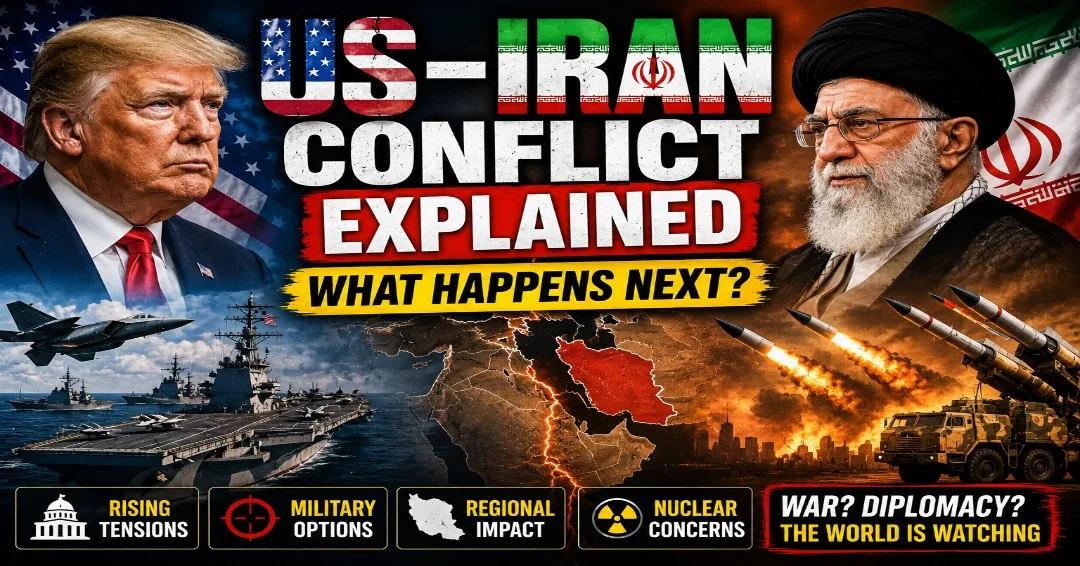
Five months in, the US-Iran war has gone through strikes, a ceasefire, a fragile truce, and now a fresh round of escalation. Here's how the conflict developed, where things stand as of mid-July 2026, and what analysts think could come next.
How it started
The war broke out on February 28, 2026, when the United States and Israel launched a coordinated wave of nearly 900 strikes against Iran over roughly 12 hours. The campaign — codenamed Operation Epic Fury on the US side — hit Iran's nuclear facilities, ballistic missile infrastructure, and top military and political leadership, including Supreme Leader Ali Khamenei, who was killed in the opening strikes.
Washington and Jerusalem framed the operation as preemptive self-defense, arguing that diplomacy had failed to stop Iran's nuclear and missile programs from becoming an unacceptable threat. The strikes followed months of rising tension: indirect US-Iran talks in Oman in February that briefly showed promise, a brutal crackdown by Iranian security forces on anti-government protests in January that killed large numbers of civilians, and a major buildup of US carrier groups and aircraft in the region.
Iran retaliated with missile and drone strikes on Israel, US bases across the Middle East, and Gulf states hosting American forces. Hezbollah briefly joined in from Lebanon before Israel struck back at its infrastructure. The fighting displaced hundreds of thousands of people and forced evacuations of foreign nationals across the region.
From ceasefire to renewed strikes
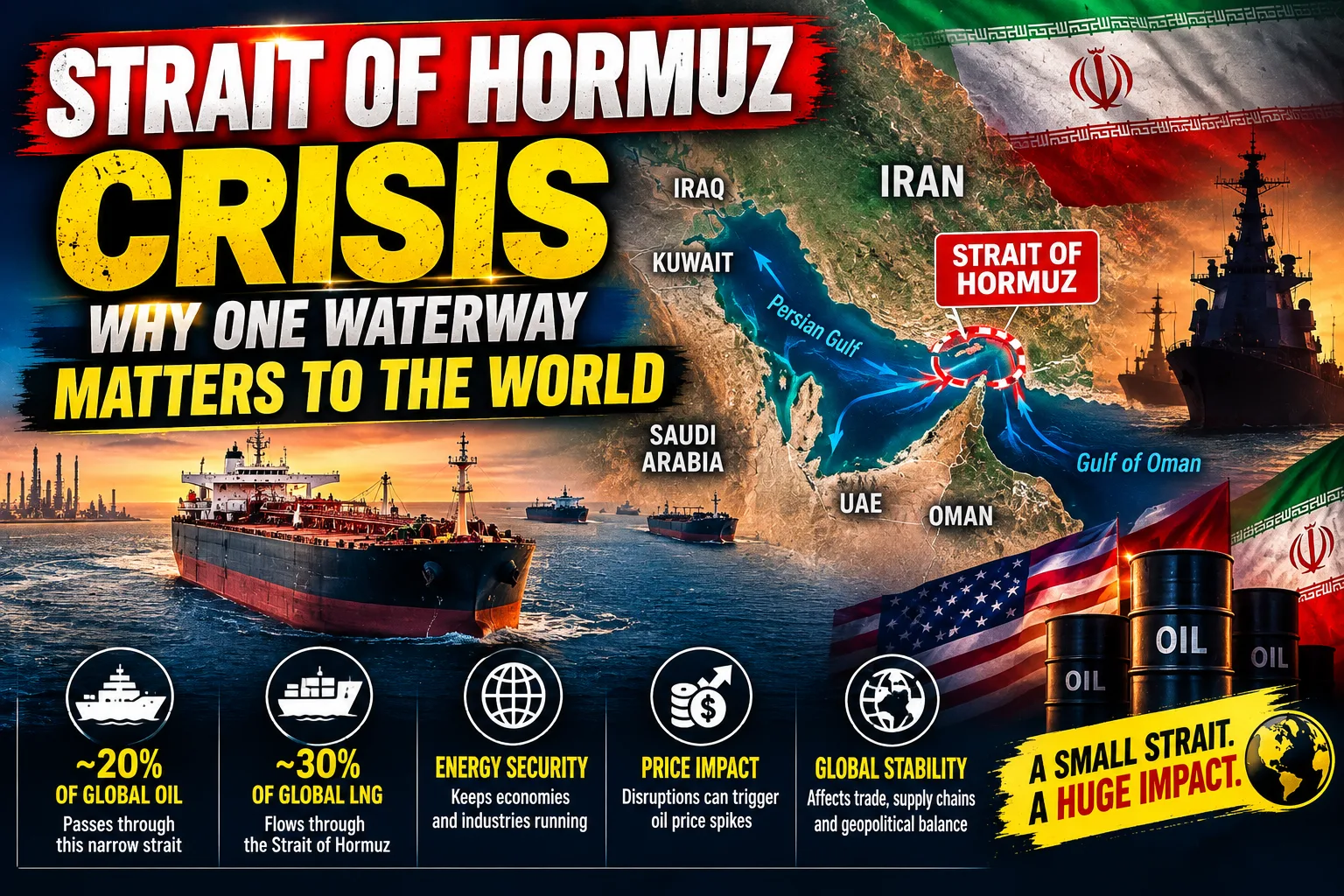
After roughly 40 days of intense combat, a ceasefire took hold on April 8, 2026, mediated in part by Pakistan. It was shaky from the start — Iran continued to assert control over the Strait of Hormuz, a chokepoint for a fifth of the world's oil trade, and periodically fired on commercial vessels. In June, the two sides reached a memorandum of understanding meant to reopen the strait and formally end hostilities, but President Trump later said the agreement "didn't mean much."
By early-to-mid July, the truce had effectively collapsed. Iran struck two tankers and fired on vessels in the strait; the US responded with repeated waves of airstrikes — at least seven consecutive nights by July 17 — targeting military infrastructure, bridges, and port facilities in southern Iran, particularly around Bandar Abbas. Iran, in turn, fired missiles and drones at Gulf states including Qatar, Kuwait, Bahrain, the UAE, and Oman, several of which host US bases, and struck a power and desalination plant in Kuwait. Casualties have mounted on both sides, including foreign sailors killed or missing after tanker attacks.
Where things stand now
As of mid-July 2026:
- Trump has said the ceasefire is "over," while also insisting continued strikes don't amount to a full return to war — a deliberately ambiguous stance analysts see partly as pressure tactics aimed at Tehran.
- The Strait of Hormuz remains contested. Iran has intermittently declared it closed and threatened ships that don't follow its preferred routes; the US has responded by intercepting and, in some cases, disabling vessels attempting to bypass its own blockade.
- The conflict has widened geographically, with strikes now reaching Gulf states beyond Iran and Israel, and renewed friction in Lebanon between Israel and Hezbollah.
- Oil markets are reacting. Brent crude has spiked well above $90 a barrel on multiple occasions as fighting has flared, though prices have eased somewhat when de-escalation seemed possible.
Iran's domestic and international position has been weakened — its former Supreme Leader is dead, its nuclear and missile programs have taken heavy damage, and human rights groups say the government has ramped up executions of political prisoners since the war began.
What happens next: the main scenarios
There's no consensus among analysts, but a few broad scenarios keep coming up:
1. Grinding, tit-for-tat "new normal." Some regional experts argue neither side wants to return to the scale of the initial March fighting, so the most likely path is continued on-and-off negotiations layered over periodic strikes — a low-boil conflict that persists for months without a comprehensive resolution.
2. Ceasefire holds, but the fight shifts to economic warfare. Under this view, direct military exchanges taper off, but Iran keeps using its asymmetric leverage over shipping and energy markets as its main point of pressure, while the US focuses on stabilizing energy prices and containing the conflict rather than escalating further.
3. Uncontrolled widening of the war. Multiple analysts warn the biggest risk isn't a deliberate decision to escalate, but a chain reaction: a proxy strike lands on the wrong target, a US strike causes higher-than-expected casualties, a tanker is sunk rather than damaged, or Israel acts unilaterally on its own timeline. With Iran already hitting Gulf states like Bahrain, Kuwait, and Qatar, there are more potential flashpoints than at any earlier point in the war.
4. A negotiated, longer-term deal. The least likely scenario in the near term, according to most assessments, but not off the table — particularly if economic pain (for Iran) or political pressure over oil prices (for the US and its allies) becomes severe enough to push both sides back toward the kind of framework floated in the June memorandum of understanding.
Energy analysts broadly agree that a full normalization of traffic through the Strait of Hormuz is unlikely before late 2026 even in a best-case scenario, given how fragile the current arrangement is.
What to watch
- Whether Gulf states retaliate directly. Qatar, Kuwait, and Bahrain have all been hit; how they respond could determine whether the war stays bilateral or becomes a wider regional conflict.
- Iran's internal stability, given the leadership losses, economic strain, and reports of intensified political repression.
- Oil price movements, which are both a consequence of the conflict and a factor shaping how much political pressure builds on Washington to wind things down.
- Diplomatic channels, particularly any renewed role for Pakistani or Omani mediators, who have facilitated talks at earlier points in the war.