
India's First Hydrogen Train: PM Modi to Flag Off Jind-Sonipat Route
Join Our WhatsApp Channel for Latest UpdatesGreen Revolution on Tracks: Prime Minister to Flag Off India's First Hydrogen-Powered Train in Haryana
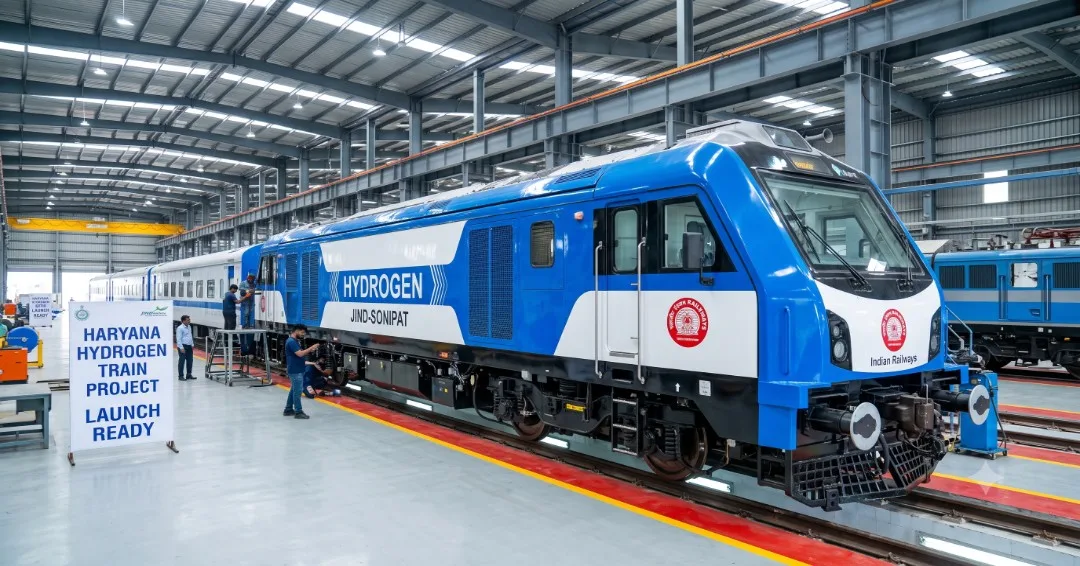
Indian Railways is stepping boldly into the future of eco-friendly transport. In what is being hailed as a historic milestone for the country's mechanical engineering and transit infrastructure, Prime Minister Narendra Modi is scheduled to visit Haryana to officially flag off India’s first-ever hydrogen-powered train.
Operating across the busy Jind-Sonipat loop, this cutting-edge train introduces zero-emission hydrogen fuel cell technology to the national carrier. The launch marks the first practical deployment of the highly anticipated "Hydrogen for Heritage" initiative, repositioning India alongside advanced technological nations like Germany and China in green transit.
CareerFlora brings you the complete operational breakdown, the science behind the fuel cell, and the massive job market shifts this green technology introduces.
Latest Verified Information: The Maiden Voyage
The mega launch event in Haryana will see the Prime Minister unveil massive regional infrastructure upgrades valued at over ₹25,000 crore, with the hydrogen train serving as the absolute crown jewel.
The train has successfully completed its extensive static tests, structural alignment trials, and safety mock-runs managed by the Research Designs and Standards Organisation (RDSO). The initial commercial runs will link the historical stations of Jind and Sonipat, spanning a distance of roughly 90 kilometers.
To support this pilot run, Indian Railways has successfully built a dedicated, high-capacity green hydrogen water-splitting and storage facility at Jind, ensuring a continuous local fuel supply.
Detailed Explanation: How Hydrogen Fuel Cell Trains Work
For students of engineering and technology, the mechanism powering this train represents a magnificent shift away from traditional diesel-electric powertrains:
- The Chemical Core: The train does not burn hydrogen in a traditional combustion engine. Instead, it features rooftop-mounted hydrogen storage tanks that feed pure hydrogen gas into an onboard Fuel Cell Stack.
- Generating Clean Power: Inside the fuel cell, hydrogen molecules combine with oxygen drawn directly from the atmosphere. This chemical reaction generates substantial electrical energy, which is routed to high-torque electric traction motors to drive the wheels.
- Zero-Pollution Output: The only byproducts of this entire power generation cycle are pure water vapor and localized heat. The train emits absolutely zero carbon dioxide, sulfur oxides, or harmful particulate matter, making it completely clean.
Hybrid Energy Storage: The system is backed by high-capacity lithium-ion batteries that store surplus electrical energy generated during braking, providing extra power boosts during steep ascents or high-speed acceleration.
Important Facts & Operational Specifications
- Route: Jind to Sonipat (Haryana), covering approximately 90 km.
- Fuel System: Hydrogen Fuel Cell + Lithium-ion battery hybrid system.
- Environmental Benefit: Saves an estimated 2.3 million liters of diesel annually per rake, completely removing heavy carbon emissions.
Refueling Metric: A single full tank of localized green hydrogen can power the train's operations for a full day without requiring intermediate halts.
Timeline of India's Green Rail Shift
- 2023-2024: Indian Railways announces the "Hydrogen for Heritage" project, outlining blueprints to convert narrow-gauge and regional heritage lines.
- 2025: Successful setting up of the primary green hydrogen production plant at Jind.
July 2026: Final safety certificates cleared by the Commissioner of Railway Safety (CRS). The Prime Minister flags off the historic maiden run.
Expert Analysis: The Economic and Engineering Impact
Infrastructural analysts emphasize that while the initial capital cost of building hydrogen infrastructure is substantially higher than standard overhead electrification, its long-term strategic value is immense.
Hydrogen trains are the ultimate green solution for regional, non-electrified routes where setting up heavy overhead electric poles is financially unviable or ecologically disruptive (such as dense forest tracks or fragile mountain terrains).
Furthermore, the domestic assembly and engineering of these fuel cell stacks give a massive boost to India's National Green Hydrogen Mission, pushing local corporations to scale up clean-energy manufacturing.
Future Career and Recruitment Scopes
The transition to green hydrogen opens up an entirely new, elite job sector for young Indian professionals:
- Green Tech Design Engineers: Massive demand is emerging for mechanical, electrical, and chemical engineers specialized in fuel cell optimization, hydrogen storage safety, and cryogenic gas handling.
- Plant Operations Managers: The setting up of local hydrogen production plants at railway stations requires highly skilled professionals trained in renewable energy management and industrial safety protocols.
Railway Modernization Roles: Indian Railways’ PSU arms (like RITES, IRCON, and BHEL) are rapidly expanding their specialized recruitment wings to onboard talent capable of steering these eco-friendly updates.
FAQs
Q: What is the speed of India’s first hydrogen train?
A: The pilot hydrogen train on the Jind-Sonipat route is designed to operate at operational speeds ranging between 100 to 110 km/h, matching standard domestic passenger trains.
Q: Is hydrogen fuel safe to use in passenger trains?
A: Absolutely. The train features state-of-the-art carbon-fiber reinforced storage tanks fitted with automatic pressure release valves, leakage sensors, and crash-resistant multi-layered shells verified by global safety bodies.
Q: What does the train emit from its exhaust pipes?
A: The train emits absolutely zero smoke or pollutants. The only output is pure, clean water vapor and harmless heat.
Conclusion
The launch of India's first hydrogen-powered train on the Jind-Sonipat route is a historic step toward a clean, sustainable future. By turning water and air into high-speed locomotive power, Indian Railways has proven that advanced engineering can coexist with environmental preservation. For students, technicians, and engineering graduates, this green shift marks the dawn of an incredibly exciting career landscape. Keep following CareerFlora for real-time infrastructure news, technical guides, and core engineering job alerts.