International Day of Science, Technology and Innovation for the South 2026: Importance, History & Global Impact
Join Our WhatsApp Channel for Latest UpdatesInternational Day of Science, Technology and Innovation for the South 2026: Importance, History & Global Impact
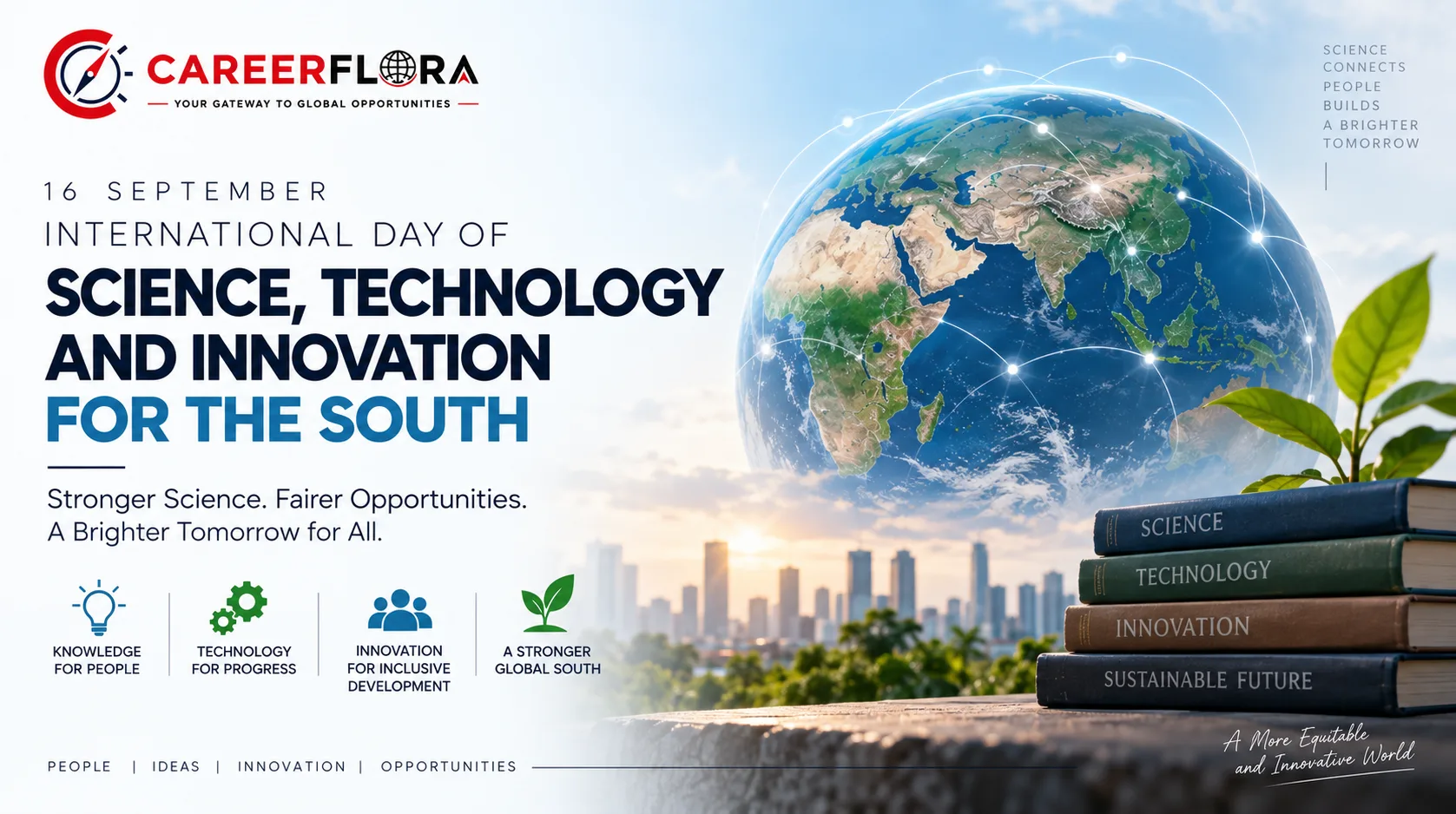
Every year on 16 September, the world observes the International Day of Science, Technology and Innovation for the South. The day recognizes the importance of science, technology and innovation in advancing sustainable development and strengthening opportunities for developing countries.
For students, researchers, entrepreneurs and young professionals across the Global South, the day highlights an important message: access to knowledge, technology and innovation can play a major role in creating more inclusive economic and social development.
What Is the International Day of Science, Technology and Innovation for the South?
The International Day of Science, Technology and Innovation for the South is a United Nations observance focused on strengthening science, technology and innovation systems in developing countries.
The UN emphasizes that an open, fair, inclusive and non-discriminatory environment is important for countries of the Global South to develop their scientific and technological capabilities.
The day also encourages international cooperation, knowledge sharing and initiatives that help developing countries benefit from scientific and technological progress.
When Is It Observed?
Date: 16 September
Observed: Every year
First official observance: 2024
The date was officially established by the United Nations General Assembly through Resolution A/RES/78/259, adopted on 9 January 2024.
The September 16 date was inspired by the G77 and China Summit on Science, Technology and Innovation, held in Havana, Cuba, on 15–16 September 2023.
Why Is This Day Important?
Science and technology increasingly influence almost every area of development, including education, healthcare, agriculture, climate action, manufacturing and digital services.
However, access to research infrastructure, technology, funding and scientific capabilities remains uneven across countries.
The UN notes that high-income countries accounted for 77% of global R&D spending in 2022, while low-income countries contributed only 0.3%. This illustrates the continuing gap in global research and innovation capacity.
The observance therefore focuses attention on building stronger scientific ecosystems and improving opportunities for developing countries.
Science, Technology and Innovation in the Global South
The Global South includes many countries where technology is being used to address local development challenges.
Innovation can support areas such as:
- Digital education
- Artificial intelligence
- Healthcare technology
- Renewable energy
- Sustainable agriculture
- Financial technology
- Climate solutions
- Digital public services
- Scientific research
- Entrepreneurship
The goal is not simply to adopt technologies developed elsewhere, but also to strengthen the ability of countries in the Global South to research, develop, adapt and create their own solutions.
Why It Matters for Students
For students, particularly those interested in STEM, AI, engineering, research and entrepreneurship, this day has strong relevance.
Students can contribute to innovation by:
- Learning emerging technologies
- Participating in research projects
- Building technology-based solutions
- Joining innovation challenges and competitions
- Exploring internships and fellowships
- Contributing to open-source projects
- Developing solutions for local problems
- Pursuing careers in science and technology
The growing digital economy also creates opportunities for young people to work with technologies that can be developed and deployed globally.
Role of AI and Emerging Technologies
Artificial intelligence, cloud computing, robotics, biotechnology and advanced digital infrastructure are changing how countries approach development.
For developing economies, these technologies can create opportunities to improve productivity and deliver services more efficiently. At the same time, countries need investment in education, research infrastructure, digital access, skills and responsible technology governance.
This makes innovation capacity just as important as technology adoption.
International Cooperation
The UN emphasizes cooperation between countries and stakeholders to strengthen science, technology and innovation in developing nations.
The 2024 resolution encourages UN Member States, international organizations, academia, civil society, the private sector and other stakeholders to observe the day through initiatives and cooperation projects that contribute to development in science, technology and innovation.
South-South and triangular cooperation can also help countries share knowledge, technologies, expertise and successful development solutions.
How Can Students Observe the Day?
Students can turn the day into an opportunity for learning and action.
1. Learn a New Technology
Explore AI, programming, robotics, data science, renewable energy or another emerging field.
2. Build a Small Project
Create a practical solution to a local problem using technology.
3. Explore Research Opportunities
Look for research internships, fellowships, competitions and innovation programs.
4. Join Open-Source Projects
Contributing to open-source software is a practical way to gain technical experience while collaborating with developers worldwide.
5. Share Knowledge
Conduct a workshop, presentation or discussion about science, technology or innovation.
International Day of Science, Technology and Innovation for the South 2026
In 2026, the observance falls on Wednesday, 16 September. The UN's official calendar lists it alongside other international observances on September 16.
Unlike some UN observances, the official UN page for this day does not currently specify a separate 2026 theme. Therefore, CareerFlora should avoid publishing an unofficial theme as the official 2026 theme.
Final Thoughts
The International Day of Science, Technology and Innovation for the South is ultimately about making scientific and technological progress more accessible, inclusive and useful for developing countries.
For young people, it is a reminder that the Global South is not only a consumer of technology. With the right education, research, infrastructure, investment and collaboration, it can also become a major source of innovation.
Science creates knowledge. Technology turns knowledge into solutions. Innovation turns solutions into impact.
CareerFlora — Your Gateway to Global Opportunities