International Equal Pay Day 2026: History, Importance & Gender Pay Gap
Join Our WhatsApp Channel for Latest UpdatesInternational Equal Pay Day 2026: History, Importance & Gender Pay Gap
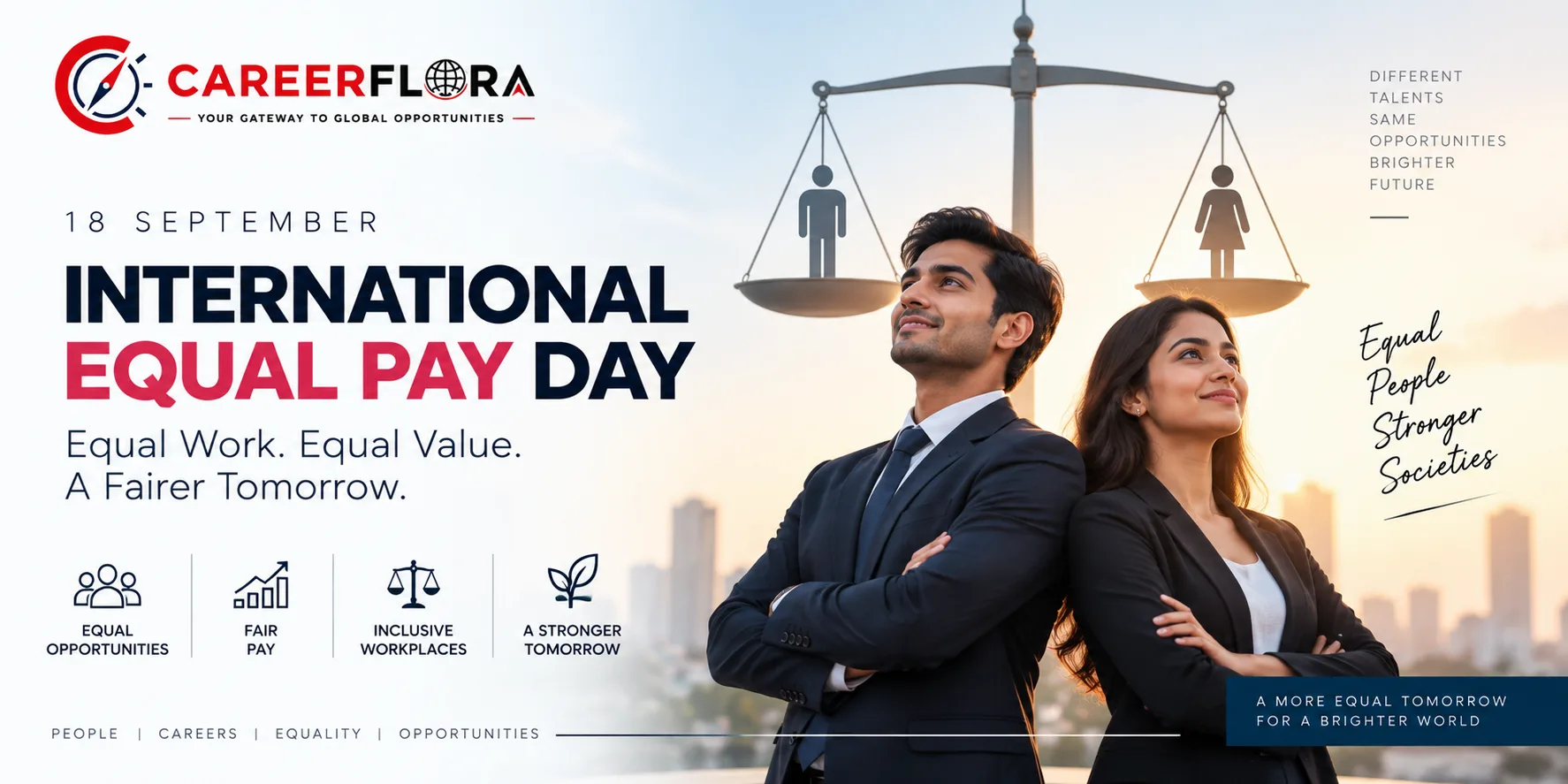
International Equal Pay Day is observed every year on 18 September to highlight the importance of achieving equal pay for work of equal value. The observance reflects the global effort to address pay inequalities and promote equal opportunities in the workplace.
For students, job seekers and working professionals, the day is especially relevant because fair remuneration, workplace equality and access to opportunities are important parts of a healthy labour market.
What Is International Equal Pay Day?
International Equal Pay Day focuses on the principle that women and men should receive equal remuneration for work of equal value.
The United Nations recognizes the day as part of its broader commitment to human rights, gender equality and the elimination of discrimination in employment.
The day also draws attention to the gender pay gap, which refers to the average difference in earnings between women and men.
When Is International Equal Pay Day 2026?
Date: 18 September 2026
Day: Friday
Observed: Every year
The United Nations General Assembly officially proclaimed 18 September as International Equal Pay Day, beginning in 2020, through Resolution A/RES/74/142.
Why Is Equal Pay Important?
Equal pay is connected with several important aspects of the world of work, including:
- Workplace equality
- Economic independence
- Decent work
- Career opportunities
- Financial security
- Social protection
- Gender equality
The UN describes equal pay for work of equal value as an important human-rights and labour issue.
Understanding the Gender Pay Gap
The gender pay gap is not simply a comparison between two people doing exactly the same job. It measures the average difference in earnings between women and men across employment.
According to the UN, women globally earn around 78 cents for every dollar earned by men, although the size of the gap varies across countries, sectors and groups.
The International Labour Organization also identifies factors such as occupational segregation, unequal access to opportunities, discrimination and differences in employment conditions as contributors to pay inequality.
What Does “Equal Pay for Work of Equal Value” Mean?
Equal pay does not only mean receiving the same salary when two people have identical job titles.
The ILO's Equal Remuneration Convention, 1951 (No. 100) uses the principle of equal remuneration for work of equal value. Job value can be assessed using factors such as:
- Skills and qualifications
- Effort
- Responsibility
- Working conditions
This approach also helps address situations where different occupations may have comparable levels of skill, effort and responsibility but are compensated differently.
Why Does the Gender Pay Gap Persist?
Several factors can contribute to differences in earnings between women and men.
Occupational Segregation
Women and men can be concentrated in different industries and occupations, with some sectors generally offering higher wages than others.
Unequal Access to Opportunities
Differences in access to higher-paying positions, leadership roles, training and career advancement can influence lifetime earnings.
Unpaid Care Work
The UN notes that women spend significantly more time on unpaid care and household work, which can affect participation and progression in paid employment.
Motherhood Penalty
Women with children can experience additional disadvantages in employment and earnings, commonly referred to as the motherhood penalty.
Workplace Discrimination
Discriminatory hiring, promotion and remuneration practices can also contribute to pay inequality.
International Equal Pay Day and the Workplace
Businesses and organizations can contribute to pay equity through measures such as:
- Transparent salary structures
- Objective job evaluation
- Fair recruitment practices
- Equal access to promotions
- Regular pay-gap analysis
- Strong workplace policies
- Support for work-life balance
- Social dialogue between employers and workers
The ILO highlights pay transparency and objective evaluation of jobs among approaches that can help address pay inequalities.
Why Is This Important for Students and Job Seekers?
For students and young professionals, understanding salary structures and workplace rights is an important part of career development.
Before accepting a job, candidates can consider:
- Job responsibilities
- Salary and benefits
- Growth opportunities
- Promotion policies
- Working conditions
- Employment contract
- Pay structure
- Professional development opportunities
Understanding these factors can help candidates make informed career decisions.
Equal Pay and Sustainable Development
Equal pay is also connected with the United Nations Sustainable Development Goals, particularly SDG 5: Gender Equality and SDG 8: Decent Work and Economic Growth.
SDG Target 8.5 specifically calls for full and productive employment and decent work for all women and men, including young people and persons with disabilities, and equal pay for work of equal value.
How Can We Observe International Equal Pay Day?
Students, professionals, employers and organizations can use the day to:
- Learn about pay equity
- Discuss workplace equality
- Understand employment rights
- Promote transparent salary practices
- Attend awareness programmes
- Share reliable information about equal pay
Support inclusive workplace policies
International Equal Pay Day 2026 Theme
As of the current UN information available for 2026, there is no separate official 2026 theme listed by the United Nations for International Equal Pay Day.
Therefore, CareerFlora should avoid presenting an unofficial slogan as the official 2026 theme.
The central focus remains equal pay for work of equal value.
Final Thoughts
International Equal Pay Day highlights an important principle of the modern workplace: people should receive equal remuneration for work of equal value, without discrimination.
For students and young professionals entering the workforce, awareness of workplace rights, compensation structures and career opportunities can help build a more informed and inclusive professional environment.