International Translation Day 2026: Why Language Skills Still Matter in the Age of AI
Join Our WhatsApp Channel for Latest UpdatesInternational Translation Day 2026: Why Language Skills Still Matter in the Age of AI
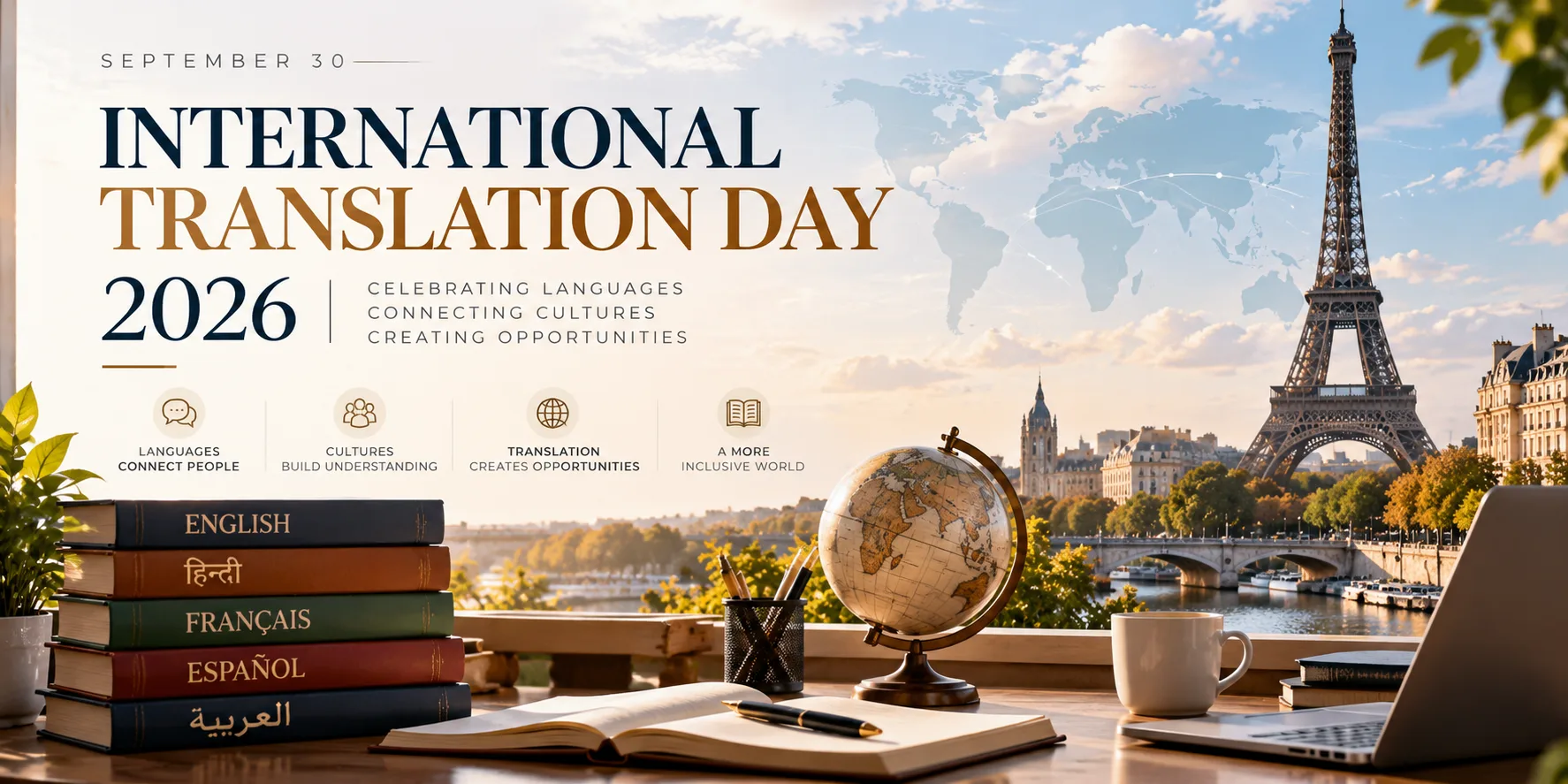
Every year on September 30, the world observes International Translation Day to recognise the contribution of translators, interpreters and other language professionals in connecting people, cultures and communities.
The United Nations officially designated September 30 as International Translation Day through Resolution 71/288 in 2017. The date was chosen because it is associated with St. Jerome, who is regarded as the patron saint of translators.
But in 2026, the importance of translation goes beyond simply converting words from one language to another.
With the rapid growth of Artificial Intelligence (AI), machine translation and multilingual digital platforms, the language industry is changing quickly.
What is International Translation Day?
International Translation Day is an opportunity to recognise the work of language professionals who help people communicate across linguistic and cultural boundaries.
According to the United Nations, translation and interpretation contribute to dialogue, understanding, international cooperation, education and development.
In a world where businesses, universities, governments and technology companies operate internationally, effective communication across languages has become increasingly important.
Why Translation Matters in the Digital Age
The internet has made information available globally, but language can still be a major barrier.
A student in India may want to access a course created in another country. A company may want to expand its services into a new market. Researchers may need to collaborate with people who speak different languages.
Translation helps make this communication possible.
The United Nations also highlights multilingualism as important for education, cultural diversity, international communication and the development of inclusive knowledge societies.
AI Is Changing the Translation Industry
AI-powered translation tools have made it possible to translate large amounts of content in seconds.
Modern AI systems can assist with:
- Text translation
- Speech-to-text conversion
- Real-time interpretation
- Subtitling and captions
- Multilingual customer support
- Document translation
- Localization of websites and applications
However, human language professionals continue to play an important role, particularly when context, cultural meaning, tone and accuracy matter.
AI can process language quickly, but communication is not always about translating individual words. A good translation often requires understanding the culture, audience and purpose behind the original message.
Career Opportunities in Languages and AI
For students, the combination of language skills + technology can create interesting career opportunities.
Some emerging areas include:
1. AI Language Specialist
Professionals can work with AI systems that process and generate human language.
2. Translator and Interpreter
Human translators remain relevant for specialised, legal, technical, academic and culturally sensitive content.
3. Localization Specialist
Localization professionals adapt websites, applications, games and digital products for different countries and languages.
4. Content and Communication
Multilingual content creation is increasingly important for global businesses and digital platforms.
5. Natural Language Processing (NLP)
Students interested in computer science and AI can explore Natural Language Processing, a field that enables computers to understand and process human language.
International Translation Day 2026 and Students
For students, today is also a reminder that communication skills are career skills.
Learning another language, improving writing ability or understanding how AI processes language can complement technical education.
A student who combines technical knowledge, communication skills and cultural awareness can potentially work across industries and international markets.
The Future: Humans and AI Working Together
The future of translation is unlikely to be simply about humans versus AI.
Instead, AI can handle repetitive and high-volume tasks while human professionals focus on areas where judgment, context, creativity and cultural understanding are important.
This combination can make multilingual communication faster while maintaining human oversight where it matters.
Conclusion
International Translation Day 2026 is more than a celebration of translators. It highlights the importance of communication in an increasingly connected world.
As AI continues to transform the way we communicate, language skills remain valuable. For students and young professionals, understanding both human language and emerging technologies can open doors to new academic and career opportunities.
Happy International Translation Day 2026!