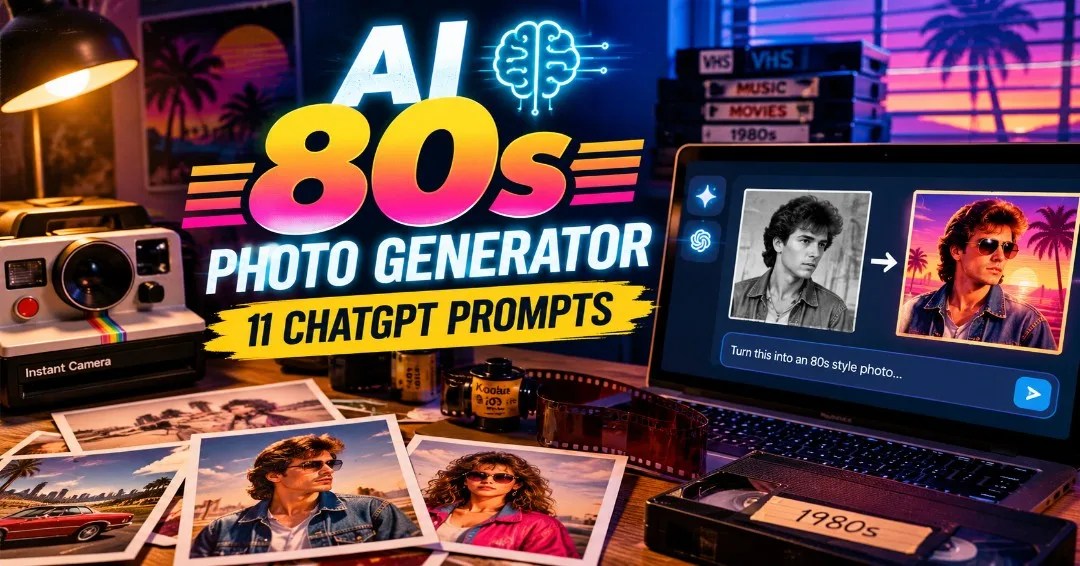
AI 80s Photo Generator: 11 ChatGPT Prompts for the 1980s Trend
Join Our WhatsApp Channel for Latest UpdatesThe 1980s AI photo trend has saturated social media feeds, replacing pristine digital portraits with soft-focus studio headshots, neon synthwave backdrops, and analog 35mm grain. Rather than relying on simple color-grading filters, this phenomenon relies on modern text-to-image diffusion models. Utilizing an AI 80s photo generator allows users to re-render modern facial geometry into period-accurate fashion, film stocks, and lighting environments.
Replicating these retro aesthetics requires more than casual phrasing. Generative models such as OpenAI's DALL-E 3 (integrated within ChatGPT Plus) and Midjourney v6 process descriptive text tokens to condition latent diffusion noise into a final composition. When specific optical terms, historic camera equipment, and lighting rigs are specified, the generator produces authentic photographic characteristics rather than cartoonish caricatures.
What Is an AI 80s Photo Generator and How Do Prompts Work?
An AI 80s photo generator is any generative text-to-image or image-to-image system capable of stylizing human portraits with late-20th-century aesthetic parameters. When you provide an input image alongside a descriptive instruction, the diffusion model converts your text prompt into mathematical vectors via a text encoder (such as CLIP or T5). These vectors condition the image generation process, steering the latent space toward specific visual features.
Vague instructions like "make me look like I am in the 1980s" force the model to rely on generalized training associations, which often result in exaggerated, plastic-looking outputs. Professional prompt engineering for analog simulation relies on four core technical pillars:
- Emulsion and Film Stock Tokenization: Modern digital sensors produce sharp, low-noise images with balanced dynamic range. Real 1980s prints were defined by chemical emulsions such as Kodak Kodachrome 64, Kodak Gold 400, or Fujifilm Fujicolor Super HR. Specifying these stocks forces the AI to simulate halogen dye clouds, characteristic S-curve contrast, micro-halation around highlights, and organic color drift.
- Period Studio Lighting Architecture: Photography in the 1980s favored distinct studio rigs. Prompting for direct on-axis flash introduces harsh specular falloff and crisp drop shadows against vertical backdrops. Conversely, prompting for dual key-and-fill strobes with umbrella diffusion or colored gels produces the soft, diffused portraits typical of mall studios.
- Lens Aberrations and Focal Profiles: Late-20th-century portraiture relied heavily on manual prime lenses—such as 85mm f/1.4 or 50mm f/1.8 optics—often paired with physical softening filters like the Tiffen Pro-Mist or vaseline-coated glass filters. Mentioning lens flare, spherical aberration, edge softness, and chromatic fringing removes modern computational sharpness.
- Facial Topology Preservation Directives: In image-to-image workflows, models tend to drift toward generic archetypes. Including precise preservation directives—such as maintaining canonical interpupillary distance, jawline contours, and ethnic skin undertones—ensures the synthesized image remains recognizable.
To understand how diffusion architectures process these prompt matrices in detail, refer to our comprehensive [Internal Link: Guide to AI Image Prompt Engineering and Diffusion Models].
Step-by-Step: How to Generate 1980s Photos in ChatGPT
Executing the 1980s AI photo trend directly within ChatGPT Plus requires utilizing its native multimodal vision and image synthesis capabilities:
- Select a Clean Reference Image: Upload a clear, front-facing headshot. Choose an image with neutral, flat lighting, devoid of heavy shadows, modern sunglasses, or dense hats.
- Select the Prompt: Choose one of the 11 targeted prompts below based on your desired historical niche.
- Inject Identity Modifiers: Paste the prompt into the chat along with the uploaded photo. Ensure the prompt explicitly instructs the engine to cross-reference the attached portrait without altering bone structure or eye shape.
- Iterative Inpainting or Refinement: If the output displays excessive digital sharpness, submit a follow-up refinement: "Increase the 35mm analog grain, soften the facial edge focus slightly, and reduce digital contrast."
For official documentation on text-prompt formatting parameters, consult the External Authority Link: OpenAI DALL-E Image Generation Capabilities.
11 Calibrated ChatGPT Prompts for the 1980s AI Photo Trend
1. The Classic 1980s High School Yearbook Portrait
The iconic American high school yearbook portrait is the foundation of the 1980s AI photo trend, defined by soft-focus studio flash and laser-grid paper backdrops.
Prompt:
"A formal 1985 high school yearbook studio portrait based precisely on the facial identity and proportions of the person in the uploaded photo. The subject is posed at a subtle three-quarter angle, wearing an oversized patterned geometric crewneck sweater over a turtleneck collar. The background is a dark studio backdrop illuminated by red and cyan crossed laser beams. Lighting is handled by an on-axis diffuse studio flash with mild specular highlights and soft drop shadows. Emulate an authentic 35mm color negative print on glossy photographic paper, featuring fine film grain, slight halation on highlights, natural skin texture, and voluminous feathered 1980s layered hair. Keep the face, facial symmetry, and skin tone identical to the source image."
2. Retro 1980s Bollywood Cinema Lead
This prompt replicates the distinct color science and theatrical studio lighting of 1980s Indian cinematic portraiture and commercial lobby cards.
Prompt:
"A cinematic studio promotional portrait of the person in the attached photograph styled as a charismatic 1980s Bollywood lead actor. Maintain the subject's exact facial structure, eye shape, and ethnic identity. Style them with voluminous, textured 1980s blown-out hair, wearing a wide-lapel silk-blend printed open-collar retro shirt with rolled sleeves and a subtle gold link chain. The background features heavy velvet curtains and warm tungsten fresnel stage rim lights with visible atmospheric haze. Rendered in the style of 35mm Eastmancolor film stock with rich saturated ambers, warm skin tones, optical diffusion, noticeable analog grain, and gentle edge vignettes."
3. The 1980s Shopping Mall Portrait Studio
Before digital photo booths, suburban shopping malls featured commercial portrait studios characterized by textured canvas backdrops and soft diffused umbrellas.
Prompt:
"An authentic 1986 department store portrait studio photograph featuring the exact individual from the reference image. The subject is framed from the chest up, leaning slightly forward, wearing a pastel cable-knit sweater layered over an Oxford shirt. The backdrop is a hand-painted, mottled gray-and-taupe muslin canvas. Lighting is produced by a single large umbrella key light creating flat, flattering illumination with soft gradient shadows. The image exhibits medium-format analog film properties, low saturation, subtle color shifts toward magenta and yellow, visible paper texture, and natural optical softness."
4. Glamorous Disco Club Atmosphere
Recreates the candid nightlife photography typical of late-night discotheques in the early to mid-1980s.
Prompt:
"A candid flash photograph taken inside a packed 1982 disco club, preserving the exact facial features and identity of the reference person. The subject is wearing a shimmering metallic sequined disco blouse, laughing naturally toward the camera. In the background, mirrored disco balls catch sweeping magenta and teal par-can spotlights across a hazy dance floor. Direct on-camera flash creates sharp, distinct shadows directly behind the subject with slight red-eye reflection and harsh falloff. The frame exhibits 35mm high-ISO film grain, motion blur in the peripheral background, and warm analog color balance."
5. Neon Synthwave Cyberpunk Portrait
Captures the retro-futuristic aesthetic popularized by 1980s electronic music culture, arcade cabinets, and early science fiction cinema.
Prompt:
"A retro-futuristic 1980s synthwave street portrait featuring the subject from the uploaded reference photograph with strict preservation of facial proportions. The subject wears a metallic nylon bomber jacket with retro embroidered patches and classic dark aviator sunglasses pushed slightly down the nose bridge. Lit entirely with split neon illumination—vivid cyan from the left and saturated magenta from the right. The background shows a rain-slicked city avenue filled with glowing neon shop signage and subtle perspective wireframe grids. Styled as a 35mm Kodak Ektachrome slide film capture with punchy contrast, deep blacks, and fine optical halation."
6. Vintage Matrimonial Studio Album Snapshot
Simulates the formal, posed commemorative photography found in family photo albums from the mid-1980s.
Prompt:
"A formal 1984 studio wedding album portrait preserving the precise facial features, eye contour, and skin undertones of the source individual. The subject is dressed in ornate, period-accurate wedding attire with heavy traditional embroidery, period hair jewelry, and a soft net dupatta or veil. Posed upright against an ornate painted architectural garden backdrop with a decorative wooden column. Lit with balanced studio strobes that produce uniform illumination. The image features soft-focus lens diffusion, mild chemical dye fading characteristic of aged prints, soft sepia-tinted midtones, and delicate 35mm film emulsion grain."
7. 1980s Candid Street Photography
Moves away from studio backdrops to replicate candid documentary street photography of everyday urban life in the 1980s.
Prompt:
"A candid 35mm documentary street photograph taken in 1983, featuring the person from the uploaded photo as an everyday pedestrian. The subject is wearing high-waisted pleated cotton trousers and a casual button-down shirt, caught mid-stride. The background reveals a bustling urban street with vintage geared scooters, classic boxy automobiles, hand-painted storefront signage, and pedestrian traffic dressed in early-1980s fashion. Captured in natural, unfiltered midday sunlight using a 50mm lens at f/5.6. Muted color palette, natural micro-scratches, Kodacolor VR 400 grain profile, and complete absence of modern technology."
8. 1980s Kerala Traditional Studio Portrait
Replicates the widely circulated South Asian vintage portrait trend, characterized by traditional attire and classic regional studio backdrops.
Prompt:
"An authentic 1984 studio portrait from South India featuring the person in the reference image with strict facial feature accuracy. The subject is wearing a traditional Kerala Kasavu cotton saree with a wide golden zari border, complemented by traditional matte-finish gold necklaces and temple jewelry. The hair is styled in a voluminous, soft 1980s bouffant wave adorned with fresh jasmine flowers. The setting includes a painted temple courtyard mural and an ornate brass Nilavilakku oil lamp in the soft background. Captured with warm tungsten studio fill lights, subtle analog emulsion grain, soft-focus diffusion, and slightly faded photographic paper borders."
9. VHS Action Movie Character Poster
Simulates the hand-painted, airbrushed aesthetic of 1980s home-video box covers and theatrical one-sheet posters.
Prompt:
"A 1980s cinematic action film hero poster featuring the face and likeness of the uploaded reference photograph. The subject has an intense expression, slightly tousled windblown hair, and wears a distressed brown bomber leather jacket over a faded tank top. The background is an illustrated montage featuring a classic sports car, distant explosions, and city silhouette gradients rendered in an authentic gouache and airbrush illustration style. Rich analog printing color halftone dots, subtle vintage paper fold creases, visible lens flares, and bold retro display typography accents across the bottom third."
10. 1987 Glam Rock Editorial Shoot
Captures the high-energy editorial portraiture published in late-1980s music magazines.
Prompt:
"A 1987 backstage editorial rock magazine portrait featuring the exact facial identity of the uploaded photo. The subject features massive, teased, hairsprayed glam rock hair, defined smoky kohl eyeliner, and a black leather motorcycle jacket decorated with silver studs and pins. Lit with hard, direct backstage floodlights combined with deep blue gelled kickers cutting through thick stage smoke. Captured on pushed high-speed Ilford black-and-white or high-contrast 35mm color film, showing pronounced film grain, stark tonal transitions, and an authentic printed-page finish."
11. Cozy 1980s Home Polaroid Candid
Recreates the warmth and color chemistry of instant film captured inside a residential living room.
Prompt:
"An unposed, authentic instant Polaroid photograph taken in a home living room in December 1986, preserving the exact likeness, eye shape, and smile of the uploaded individual. The subject is sitting casually on an earth-toned velvet sofa, dressed in a loose-fitting knit cardigan. The room is decorated with wood-paneled walls, a cathode-ray-tube television set, and heavy patterned curtains. Illuminated by a single harsh, built-in camera flash that casts immediate drop shadows. The image showcases classic Polaroid chemical emulsion dynamics: clipped highlights, greenish-blue shadow shifts, organic softness, and soft vintage chemical border artifacts."
Technical Comparison of AI Image Engines for 1980s Aesthetics
Choosing the right AI 80s photo generator depends on whether your priority is prompt adherence or raw photographic realism.
| AI Platform | Strengths for 1980s Aesthetics | Identity Preservation Method | Primary Limitation |
|---|---|---|---|
| ChatGPT (DALL-E 3) | Superior natural language interpretation; reliably parses complex lighting and props. | Multimodal reference cross-prompting inside chat. | Can over-smooth skin surfaces if not prompted for heavy grain. |
| Midjourney v6 | Industry-leading photorealism, authentic emulsion grain, and optical flare rendering. | --cref (Character Reference) or image weighting (--iw 2.0). | Requires Discord interface; strict text syntax formatting needed. |
| Stable Diffusion XL | Complete parameter control, custom LoRA support for vintage film, inpainting freedom. | IP-Adapter FaceID or ControlNet OpenPose/Canny. | Requires local GPU hardware or complex cloud web interfaces. |
Optimization Guide: Troubleshooting Common Diffusion Artifacts
When generating vintage portraits, diffusion models frequently encounter predictable failure states. Use these adjustments to optimize outputs:
- Eliminating Modern Computational Cleanness: Modern rendering pipelines automatically denoise skin textures. If your portrait appears plastic, explicitly prompt: "35mm Kodachrome grain structure, unretouched skin pores, optical lens softening, chromatic aberration, no digital sharpening."
- Fixing Facial Feature Drift: If the generator generates a completely different person, structure your prompt with priority hierarchy. State: "Maintain the strict facial symmetry, jawline, interpupillary distance, and bridge of the nose of the attached reference image without modification."
- Correcting Anachronistic Elements: Diffusion models often accidentally include modern smartphones, flat-screen monitors, or contemporary attire. Counter this by adding explicit negative constraints: "No modern electronics, no smartphones, no contemporary clothing, no modern hairstyles."
For further guidance on fixing generation errors, explore our [Internal Link: Troubleshooting Common AI Generation and Artifact Issues].
Frequently Asked Questions
Which free AI 80s photo generator provides the best results?
Microsoft Copilot (Designer) and Google Gemini provide accessible pathways to generate 1980s imagery without subscription costs. Both platforms support natural language prompts and reference image analysis.
Why do AI-generated retro photos often look too smooth?
Default model configurations are optimized to produce clean, high-resolution outputs. To achieve a realistic 1980s look, users must explicitly demand photographic degradation: specify analog print defects, low-light ISO noise, 35mm optical grain, and lens diffusion filters.
How do I maintain exact facial identity when generating retro portraits?
When using ChatGPT, upload a single, clear portrait and state: "Do not alter the bone structure, eye shape, or facial geometry of the reference individual." In advanced tools like Midjourney, use the --cref [image URL] parameter with --cw 100 to constrain facial deviations.
Final Takeaway
The 1980s AI photo trend showcases the precision of modern generative models when paired with historically accurate technical terminology. By replacing generic requests with detailed photographic variables—analog film emulsions, specific studio lighting setups, and era-appropriate wardrobe details—an AI 80s photo generator produces compelling, museum-grade retro transformations that honor the analog era.