
Global Heatwave 2026: Countries Facing Extreme Temperatures
Join Our WhatsApp Channel for Latest UpdatesGlobal Heatwave 2026: Countries Facing Extreme Temperatures
A Summer of Broken Records
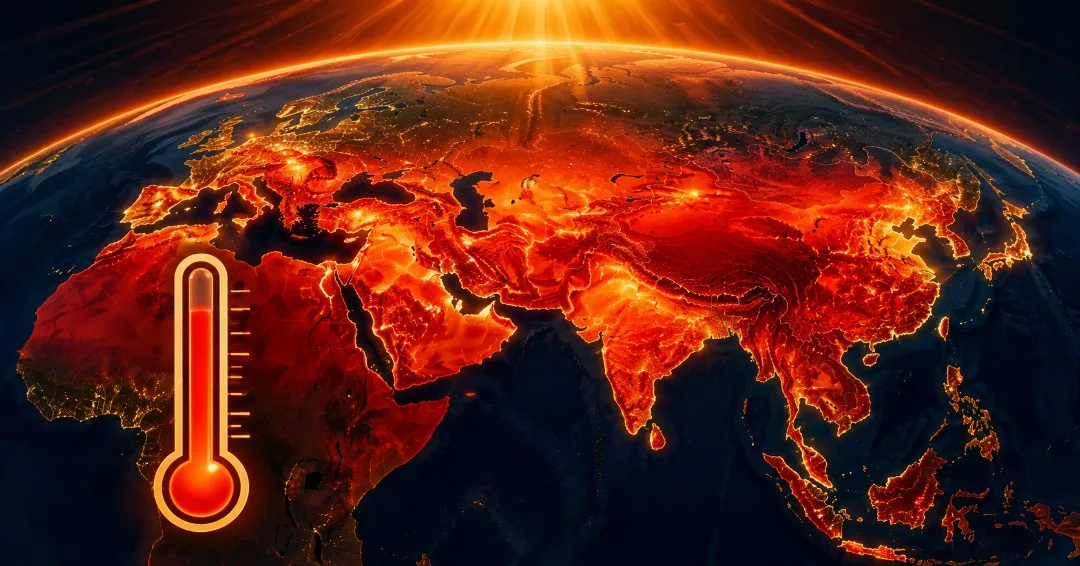
2026 has turned into one of the most extreme heat years on record, with successive waves of extreme temperatures rolling across Europe, Asia, and the Middle East since early spring. Multiple national all-time records have fallen, sometimes by margins that scientists describe as exceptionally large, and the pattern shows no clear sign of stopping. Behind the numbers is a familiar mix: a strengthening El Niño, unusually warm ocean surface temperatures, and a shifting jet stream, all layered on top of a long-term warming trend.
Here's a region-by-region breakdown of where the heat has hit hardest.
Europe: Its Warmest June Ever
Western Europe just recorded its warmest June on record, with average temperatures running well above the 1991–2020 baseline in some locations by as much as 8°C. More than a dozen countries set new June records, several beating the old marks by two or three degrees Celsius — an unusually wide margin for national temperature records.
France was among the hardest hit. The country logged its highest-ever nationwide average temperature, with Pissos reaching 44.3°C (111.7°F), while Paris hit a June record of 40.9°C (105.6°F). France's June 23 was reportedly its hottest day since national records began in 1947. The UK set a new June record of 37.7°C (99.9°F), more than 2°C above the previous 1957 record, and Germany broke its all-time record on three consecutive days, topping out at 41.7°C (107°F).
By late July, heat was still building. Spain's Fabra Observatory in Barcelona recorded 40.5°C, and wildfires tore through the Iberian Peninsula and southern France as dry soils and drought conditions compounded the heat. A fourth wave of heat in early August has centered on Italy, Austria, Hungary, Slovakia, Croatia, and neighboring countries, with peak temperatures above 38°C (100°F). Germany has also seen the heat give way to violent aftershocks — a record 41-degree heatwave was followed by severe thunderstorms and hail that paralyzed transit hubs across the south and east of the country.
South Asia: A "Calamity" of Heat
South Asia's pre-monsoon heat this year has been described by meteorologists as a genuine calamity. India, Pakistan, and Bangladesh all saw temperatures soar well above seasonal norms, with parts of the region approaching or exceeding 45–50°C (113–122°F).
India bore the brunt of it. At one point, data compiled by air-quality trackers showed that all 50 of the world's hottest cities on record that day were in India — none from the Middle East, sub-Saharan Africa, or Australia made the list. Rajasthan became the epicenter, with Sri Ganganagar hitting 48.2°C, while Delhi reached 45.9°C. Researchers estimate a single day of extreme heat causes roughly 3,400 excess deaths nationally in India, rising to nearly 30,000 over a five-day heatwave. Pakistan reported multiple heat-related deaths as authorities issued warnings across the country.
The Middle East and Central Asia: Some of the Hottest Readings on the Planet
The Middle East and Central Asia have recorded some of the single highest temperatures anywhere on Earth this year. Delhoran, Iran, reportedly hit 52.1°C on what trackers called the hottest day of 2026 globally, with parts of the wider Middle East reaching 53°C. Central Asia has seen its own extraordinary spike, with forecasts of temperatures near 48°C in Uzbekistan and Turkmenistan and 45°C in Kazakhstan — highly unusual for a region well north of the tropics, where even overnight lows have stayed above 32°C.
East Asia: A "Nightmarish" Stretch
East Asia's heat has been especially relentless. South Korea recorded its highest-ever temperature at 41.4°C as its heatwave intensified. Trackers reported nearly 500 temperature records broken across the region in just a few weeks, with heat indexes exceeding 50°C (122°F) in places — heat that meteorologists have called the worst in East Asia's recorded history by a wide margin, with dangerously high nighttime lows offering little relief.
What's Driving It
Behind the individual heatwaves is a shared set of climate drivers. The World Meteorological Organization put the odds of El Niño developing between June and August 2026 at around 80%, and Pacific sea-surface temperatures feeding that El Niño have been running unusually warm — reportedly about 3°C above normal earlier than typically seen. Combined with already-elevated global ocean temperatures and a wandering jet stream, these factors have compounded to push heat to record levels across multiple continents simultaneously rather than in the more isolated regional events of past years.
The Human and Economic Toll
The impact goes beyond thermometer readings. Wildfires have followed the heat across the Iberian Peninsula and southern France. Drought has deepened across western and central Europe. Heat-related deaths have been reported across India, Pakistan, and parts of Europe, and hospitals in multiple regions have faced surges tied to heat stroke and dehydration. Economic ripple effects are showing up too — from strained power grids during peak demand to disrupted transit and infrastructure after the storms that have followed some of the worst heat events.
What to Watch Next
A few things worth tracking as the year continues:
- Whether El Niño fully develops and how it interacts with an already-warm ocean — a combination that could keep pushing temperatures higher into late summer.
- How South Asia's monsoon season affects the ongoing heat, since monsoon rains typically bring at least partial relief to India, Pakistan, and Bangladesh.
- Whether East Asia's heatwave — already described as historically severe — continues to break records, particularly given the danger posed by persistently high nighttime temperatures.
The secondary effects of extreme heat, including wildfire risk, strain on power grids, and the kind of violent storm systems that have already followed heatwaves in Germany.
The Bottom Line
2026 has already produced record-breaking heat on nearly every continent, with Europe, South Asia, Central Asia, the Middle East, and East Asia all logging some of their hottest readings in recorded history within months of each other. Scientists point to a mix of El Niño, warm oceans, and long-term climate trends as the underlying drivers — and with peak summer heat still unfolding in parts of the Northern Hemisphere, more records may yet fall before the season turns.
This is a rapidly evolving climate story. Figures should be checked against the latest meteorological reports as conditions develop.