Trump Gives Iran "Last Chance": What Could Happen Next?
Join Our WhatsApp Channel for Latest UpdatesTrump Gives Iran "Last Chance": What Could Happen Next?
A Deal, Or "Decapitation"
President Donald Trump has once again put Iran on notice. Speaking from the Oval Office this week, he called renewed negotiations Iran's "last chance" to sign a deal, adding that he has no time constraints on the talks because he isn't seeking reelection. When reporters pushed him on why this attempt should be taken more seriously than his previous warnings, Trump responded that he wants to give Iran "every last chance before decapitation."
It's a stark phrase, and it lands against the backdrop of a war that has already reshaped the region.
How We Got Here
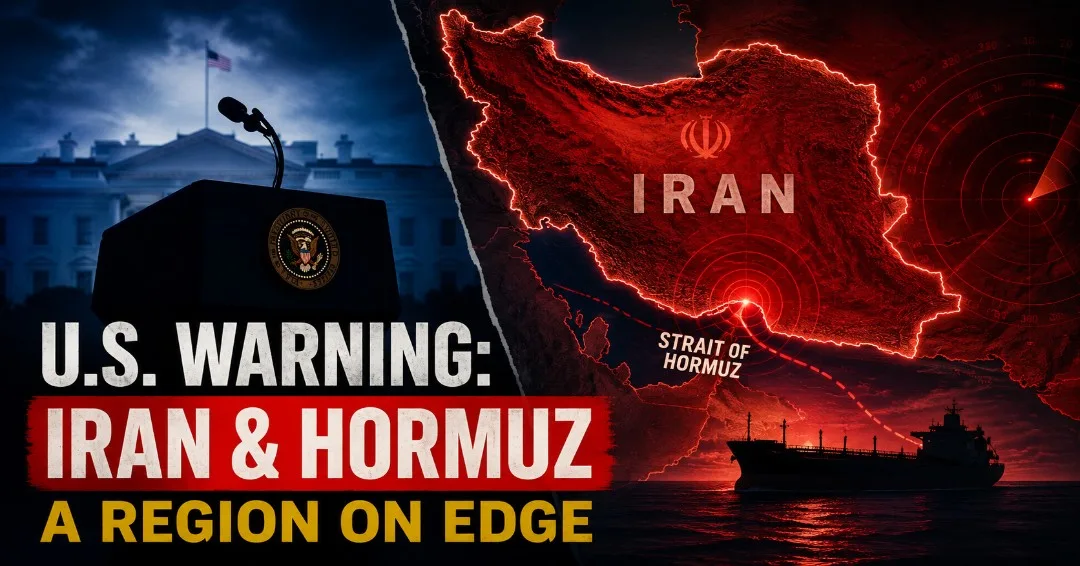
Trump announced "major combat operations" against Iran on February 28, 2026, with joint U.S.-Israeli strikes hitting military, government, and infrastructure targets. Trump has said the war was launched to prevent Iran from acquiring a nuclear weapon. In response, Tehran clamped down on commercial shipping through the Strait of Hormuz, the critical oil chokepoint between Iran and Oman, making control of the waterway the central issue in subsequent peace talks.
Since then, the pattern has repeated itself several times: Trump threatens a major strike, then pulls back at the last moment in favor of renewed diplomacy. This is reportedly the fifth time he has called off airstrikes in favor of talks since April.
What's Different This Time?
According to Trump, this round of talks began because regional powers intervened. He said the U.S. had "an attack planned that would have been the biggest attack since World War II" before Saudi Arabia, the UAE, and Qatar reached out asking him to hold off. Trump has claimed Iran itself, backed by those same three Gulf states, initiated the renewed talks because it did not want to be hit by what he described as the largest strikes since World War II.
He also revealed an unusual detail about why the strike didn't go forward: Trump said leaks about the severity of the planned attack reached Iran, which then knew what was coming — and that the leak may have inadvertently helped avert a much larger death toll, since it triggered the last-minute diplomatic push.
Publicly, though, the two sides can't even agree on whether talks are happening. Trump described Iran's leadership as "unbelievably duplicitous" after Tehran denied that negotiations had resumed. Trump has said Iranian officials ask for — "some would say 'beg' for" — meetings, then publicly insist they aren't negotiating with the U.S. at all, claiming they're "only dealing with Oman."
The Two-Phase Plan
Trump has sketched out what he says is a straightforward roadmap:
- Phase One — Reopening the Strait of Hormuz. Trump claimed the Strait could open fully "literally by tomorrow" as the first step of any agreement. He said negotiations should move quickly and unfold in two phases, beginning with reopening the Strait. On tolls, he insisted there will be no charges for passage through the Strait of Hormuz — though he added that if anyone tries to charge, "we'll charge."
- Phase Two — Denuclearization. A second phase would tackle Iran's denuclearization, which Trump acknowledged "would take a little while." On social media, he framed the stakes bluntly: "Nothing gets through to Iran, unless we want it to, and nothing will get through, unless a Deal, or Total Surrender, is accomplished."
In the meantime, the U.S. has said it will continue blockading Iran's southern ports until Washington and Tehran reach a deal to end the war.
Market Reaction
Financial markets are watching closely — and reacting fast to every twist. U.S. stocks rose after Trump called off strikes over the weekend at the request of Gulf allies, while Brent crude fell roughly 6%, dropping to around $83 per barrel. That kind of swing underscores how directly this conflict is tied to global oil supply, given the Strait of Hormuz's role as one of the world's most important energy corridors.
What Could Happen Next?
A few realistic paths forward:
- A phased deal actually sticks. If the Strait reopens and a monitoring framework for phase one holds, attention shifts to the far harder question of Iran's nuclear program — a process likely to take much longer than the war's opening phase did.
- Talks collapse again, and strikes resume. Given that this is reportedly the fifth cancelled attack since April, skepticism is warranted. Trump himself has hinted the threat is fully real: he described the shelved plan as potentially "the biggest attack since World War II."
- A prolonged, ambiguous middle ground. Public denials from Tehran, mixed signals, and back-channel negotiations through Oman could continue indefinitely, with neither a breakthrough nor a full-scale escalation — keeping oil markets and regional allies on edge.
Regional mediators shape the outcome. With Saudi Arabia, the UAE, and Qatar reportedly pushing both sides toward the table, their continued involvement could be the deciding factor in whether this "last chance" produces a lasting result or just another delay.
The Bottom Line
Trump's "last chance" framing carries real weight given the scale of strikes reportedly being held in reserve, but the same framing has been used before without a final resolution. The coming days — particularly whether the Strait of Hormuz actually reopens as promised — should offer the clearest signal yet of whether this round of diplomacy holds or breaks down like previous attempts.
This situation is developing. Details should be verified against the latest reporting as the story evolves.