US-Russia Sanctions Bill Explained: Why India Could Face New Tariff Pressure
Join Our WhatsApp Channel for Latest UpdatesUS-Russia Sanctions Bill Explained: Why India Could Face New Tariff Pressure?
What Just Happened
The US Senate has passed a sweeping new Russia sanctions bill, and India is squarely in its crosshairs. The legislation — officially the Lindsey O. Graham Sanctioning Russia and Iran Act of 2026, named for the late senator who spent more than a year building support for it — cleared the Senate with a bipartisan 86–11 vote. It now heads to the House of Representatives, where it will need approval before it can become law.
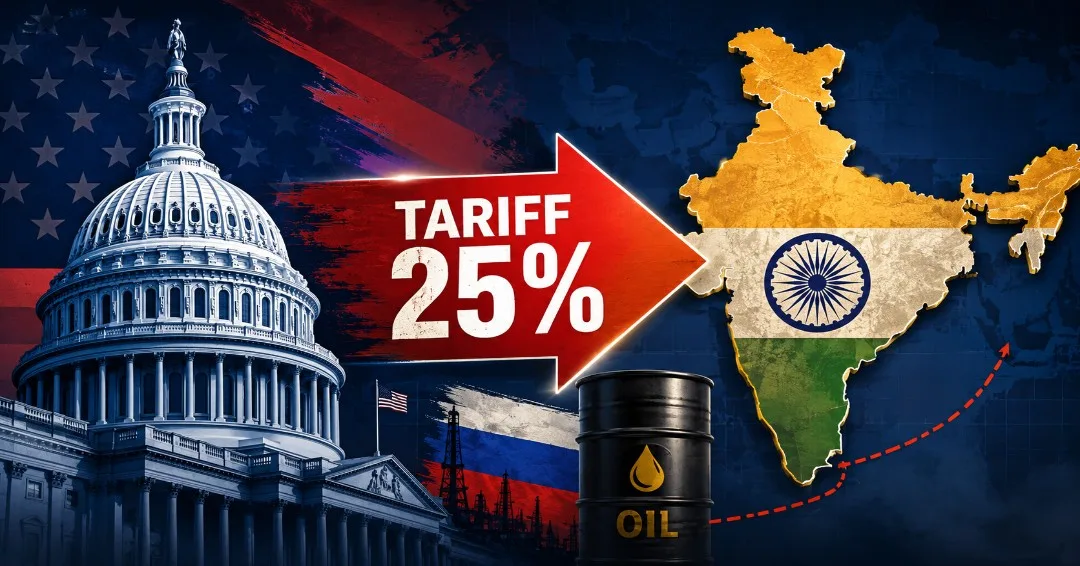
If enacted, the bill would give President Trump the authority to impose tariffs of up to 100% on goods from countries that rank among the top five buyers of Russian oil and gas. Right now, that list includes China, India, Azerbaijan, Hungary, and Slovakia.
What's Actually in the Bill
At its core, the legislation is designed to choke off the revenue that funds Russia's war effort by making it far more costly for other countries to keep buying Russian energy. A few key pieces stand out:
- Tariff authority up to 100%. The bill would let Trump impose steep tariffs — as high as 100% — on imports from nations among the top five importers of Russian crude oil and natural gas.
- An exemption threshold. Countries that import less than 15% of Russia's total natural gas exports would be exempt from the tariff provisions.
- Sanctions on Russian officials and firms. Beyond the tariff mechanism, the bill also targets Russian President Vladimir Putin, more than 20 senior officials, and companies tied to Russia's defense sector.
- The Shadow Fleet Sanctions Act. The legislation folds in this bipartisan measure aimed at the network of tankers Russia has used to move oil while evading existing sanctions.
- An Iran add-on. Trump reportedly directed lawmakers to amend the bill to also cover countries buying Iranian oil, a change analysts say could complicate the bill's path through the House by giving some Democrats pause about how broadly the new tariff powers would be expanded.
It's worth noting this isn't the bill's first version. An earlier draft debated back in January 2026 floated tariffs as steep as 500% on countries trading in Russian oil and uranium — before the legislation was revised into its current, still-severe, 100% form.
Why India Is In the Firing Line
The reason India keeps coming up in this conversation is simple: it buys a lot of Russian oil. India is currently the second-largest buyer of Russian crude in the world, behind only China, and together the two countries account for roughly 70% of Russia's energy exports. Indian refiners have leaned heavily on discounted Russian crude since the war in Ukraine began, treating it as a matter of energy security in a volatile global market.
That reliance has already cost India once. Washington raised tariffs on Indian goods over Russian oil purchases in 2025, and it was the subsequent US sanctions on Russian oil majors Rosneft and Lukoil in October 2025 that pushed Indian refiners to start diversifying toward Middle Eastern crude. This new bill would raise the stakes considerably further, threatening tariffs double what India has faced so far.
The White House, for its part, has been carefully noncommittal about how the bill intersects with ongoing India-US trade negotiations. When asked directly, White House economic adviser Kevin Hassett declined to say whether the legislation would affect the talks, saying only that it was a question for the negotiating teams.
What Could Happen Next
A few things will determine how this plays out:
- Whether the House passes it — and in what form. The bill cleared the Senate comfortably, but its path through the House is less certain, especially with the added Iran provisions potentially costing it some Democratic support.
- Whether India reduces Russian oil imports further. Since the exemption in the bill hinges on import volumes, New Delhi's own energy sourcing decisions in the coming months could directly affect whether it ends up facing the tariffs at all.
- How trade negotiations evolve alongside sanctions. With US-India trade talks already underway, the bill adds a new pressure point — and how negotiators handle it could shape the broader relationship far beyond the sanctions question itself.
The Middle East's role as an alternative supplier. Analysts note that the bill's real-world effectiveness will partly depend on whether Middle Eastern energy supplies stay stable enough to give countries like India a viable, non-Russian alternative at scale.
The Bottom Line
The Lindsey O. Graham Sanctioning Russia and Iran Act of 2026 marks one of the most aggressive attempts yet by Washington to squeeze Russia's war financing by targeting the countries still buying its oil — and India, as the world's second-largest buyer of Russian crude, has the most to lose if it becomes law unchanged. Whether that actually happens now depends on the House, on how India adjusts its energy imports, and on how the ongoing India-US trade talks absorb yet another point of friction.
This is a developing legislative story. Details on the bill's provisions and its path through Congress should be verified against the latest reporting.