
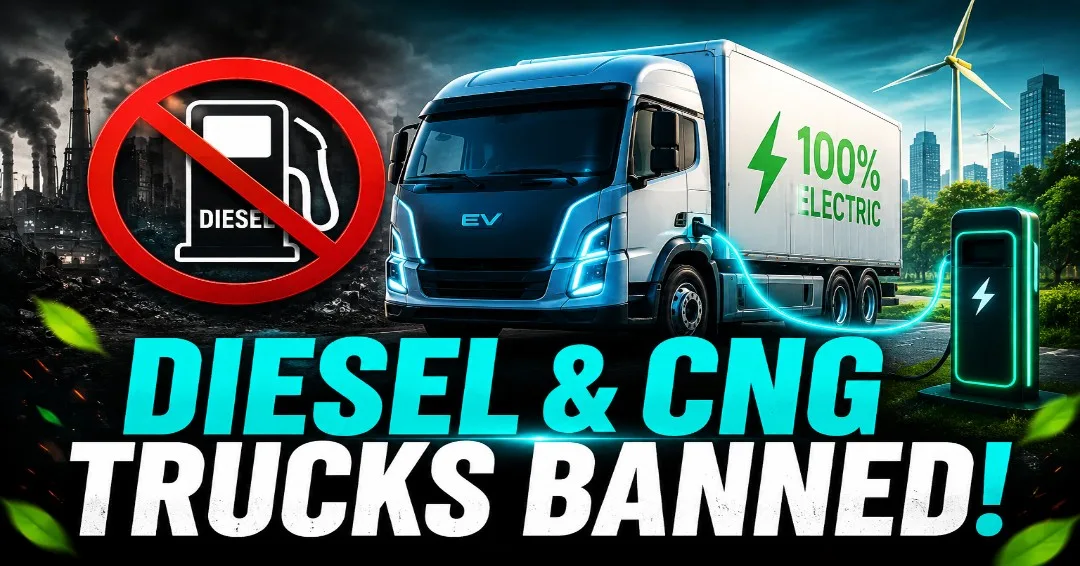
CAQM Bans Non-Electric Commercial Vehicles in Delhi-NCR from 2027
Join Our WhatsApp Channel for Latest UpdatesGreen Logistics Mandate: CAQM Orders Complete Shift to Electric Light Goods Vehicles in Delhi-NCR from January 2027
In a major policy intervention designed to curb persistent vehicular pollution across the National Capital Region, the Commission for Air Quality Management (CAQM) has issued a regulatory mandate ordering a phased, mandatory transition to 100% electric commercial vehicles.
Effective January 1, 2027, no new registrations of non-electric (petrol, diesel, and CNG) Light Goods Vehicles (LGVs) belonging to the N1 and N2 categories will be permitted in Delhi, with the restriction progressively expanding across high-density districts throughout the wider NCR.
This policy directive will fundamentally restructure the domestic logistics industry, urban freight networks, e-commerce delivery fleets, and commercial vehicle manufacturing in India. CareerFlora delivers a full analysis of the regulatory roadmap, business compliance requirements, and the surging career market in electric mobility infrastructure.
Latest Verified Information: The CAQM Directive
The statutory order, issued under Section 12 of the Commission for Air Quality Management in National Capital Region and Adjoining Areas Act, sets enforceable legal targets for vehicle registration authorities across Delhi, Haryana, Uttar Pradesh, and Rajasthan.
Under the directive, regional transport offices (RTOs) within the National Capital Territory (NCT) of Delhi are barred from registering any new N1-category light commercial vehicles (gross vehicle weight up to 3.5 tonnes) and N2-category vehicles unless they operate exclusively on pure electric powertrains starting January 2027.
The mandate targets the primary source of winter particulate emissions (PM2.5 and PM10), as light delivery vehicles generate continuous, localized emissions during low-speed urban stop-and-go driving cycles.
Detailed Explanation: What Qualifies Under N1 and N2 Categories?
Commercial fleet operators must understand the precise vehicular classifications affected by this mandate:
- N1 Category: Motor vehicles used for the carriage of goods and having a maximum gross vehicle weight not exceeding 3.5 tonnes. This includes the most common delivery vehicles in India (such as the Tata Ace, Mahindra Bolero Maxi Truck, and Ashok Leyland Dost series).
- N2 Category: Goods carriage vehicles with a maximum gross weight exceeding 3.5 tonnes but not exceeding 12 tonnes, commonly used for intra-city supply chain distribution and FMCG transportation.
The Phased Implementation Roadmap
To avoid overnight supply chain disruptions, the CAQM has laid out an incremental expansion schedule:
+-------------------+-------------------------------------------------------------+
| Implementation Date| Geographic Scope & Mandated Restriction                    |
+-------------------+-------------------------------------------------------------+
| January 1, 2027   | Complete ban on new non-electric N1 LGVs in NCT of Delhi.   |
| July 1, 2027      | Ban extends to adjoining dense districts (Gurugram, Noida,  |
|                   | Faridabad, Ghaziabad).                                      |
| January 1, 2028   | Full NCR coverage; zero non-EV commercial registrations.   |
+-------------------+-------------------------------------------------------------+
Economic & Industrial Impact on Fleets & E-Commerce
The mandate places immense operational pressure on major logistics companies, quick-commerce operators (Blinkit, Zepto, Instamart), and e-commerce giants (Amazon, Flipkart).
- Surging Capital Expenditure (CapEx): While electric light commercial vehicles offer significantly lower operating costs per kilometer, their upfront purchase price remains 25% to 40% higher than traditional diesel/CNG alternatives due to battery pack pricing.
- Charging Hub Bottlenecks: Fleet operators will require massive, high-speed megawatt charging hubs stationed around peripheral warehousing clusters along the Kundli-Manesar-Palwal (KMP) Expressway.
- Automakers Accelerate EV Pipelines: Major commercial vehicle OEMs (Tata Motors, Mahindra & Mahindra, Switch Mobility, Eicher) are rapidly adjusting factory production lines to scale electric variants of their best-selling light delivery trucks.
Expert Analysis: Career & Business Opportunities in Green Tech
The aggressive transition timeline opens up high-growth opportunities across the green economy:
- Fleet Electrification Consultants: High corporate demand for specialists who can plan depot power upgrades, route optimization algorithms, and charging scheduling.
- Battery Swapping Network Technicians: Rapid expansion of swap-station infrastructure for small commercial three-wheelers and four-wheelers across urban industrial belts.
- EV Maintenance & Power Electronics Engineers: Significant employment shift from traditional mechanical garages to high-voltage automotive diagnostic centers.
FAQs
Q: Does this CAQM ban apply to existing registered diesel/CNG commercial vehicles?
A: No. The current order applies strictly to the new registration of non-electric light goods vehicles starting January 2027. Existing registered vehicles can operate subject to standard fitness certificate validity and age limits (10 years for diesel, 15 years for petrol/CNG in NCR).
Q: Are private passenger cars affected by this specific order?
A: No. The directive targets N1 and N2 category commercial light goods vehicles. Private passenger cars are not covered under this specific freight regulation.
Q: Can CNG delivery trucks be registered in Delhi after January 2027?
A: No. The CAQM mandate requires new registrations in Delhi to be zero-emission electric vehicles; CNG light goods vehicles will no longer be registered after the deadline.
Conclusion
The CAQM’s decision to ban new non-electric commercial goods vehicles from January 2027 marks a definitive turning point in India's urban clean air strategy. For businesses, supply chain managers, and automobile engineers, the era of internal combustion freight in the capital is officially closing. Stay tuned to CareerFlora for expert coverage of EV policies, automotive career paths, and corporate sustainability insights.