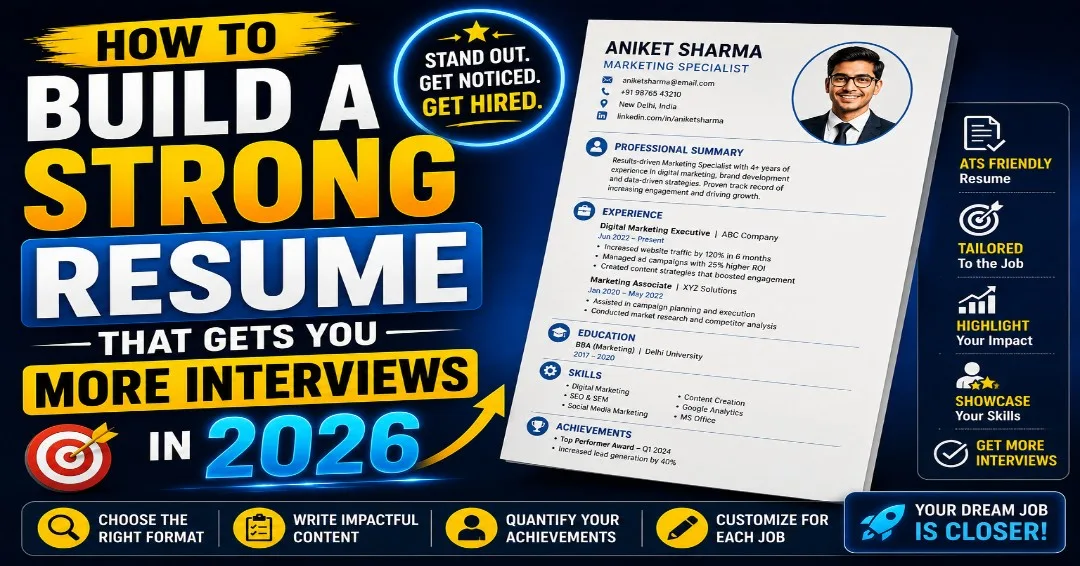
How to Build a Strong Resume That Gets You More Interviews in 2026
Join Our WhatsApp Channel for Latest UpdatesHow to Build a Strong Resume That Gets You More Interviews in 2026
Your resume is often the first impression you make on a recruiter. In today's competitive job market, having a professionally written and well-structured resume is more important than ever. A strong resume not only showcases your skills and experience but also demonstrates your professionalism and attention to detail.
Why Your Resume Matters
Recruiters usually spend only a few seconds scanning each resume before deciding whether to continue reading. This means your resume must quickly highlight your qualifications, achievements, and relevance to the position.
Essential Sections Every Resume Should Include
- Contact Information
- Professional Summary
- Skills
- Work Experience
- Education
- Certifications
- Projects
- Achievements
- Languages (Optional)
Tips for Writing a Better Resume
1. Customize It for Every Job
Avoid sending the same resume to every employer. Tailor your skills and experience according to the job description.
2. Focus on Achievements
Instead of simply listing responsibilities, highlight measurable achievements whenever possible.
Example:
- Increased website traffic by 35% through SEO optimization.
- Reduced processing time by 20% using workflow automation.
3. Keep the Design Clean
Use a simple layout with clear headings, readable fonts, and consistent spacing. Avoid unnecessary graphics unless you're applying for a design-related role.
4. Include Relevant Keywords
Many companies use Applicant Tracking Systems (ATS) to filter resumes. Incorporating relevant keywords from the job description can improve your chances of passing these systems.
5. Proofread Carefully
Grammar mistakes and spelling errors create a poor impression. Always review your resume before submitting it.
Common Resume Mistakes
- Using an outdated format
- Including irrelevant information
- Writing long paragraphs
- Adding an unprofessional email address
- Listing every skill without evidence
- Not updating recent achievements
Final Thoughts
A great resume is not about making it longer—it's about making it more relevant and impactful. Spend time tailoring your resume, highlighting your achievements, and presenting your information clearly. Small improvements can make a significant difference in securing interviews and advancing your career.
Remember, your resume is your personal marketing document. Invest the effort to make it stand out, and you'll greatly increase your chances of getting noticed by recruiters.